

The war between the US/Israel, and Iran has sent shockwaves through global financial markets, interrupting the recent broad rally in emerging market (EM) assets. In classic risk-off fashion, EM assets (bonds, equities, and foreign exchange [FX]) have declined in tandem as investors reassess geopolitical risk.
The key question for investors is whether the oil shock triggered by the conflict could lead to a broader global downturn that materially weakens EM assets. Much will depend on the scale and duration of the energy disruption, particularly if the Strait of Hormuz (through which roughly one-fifth of global oil supply flows) faces prolonged disruption. For now, however, it is premature to turn outright bearish on EM assets. The Iranian leadership has shown little appetite for negotiations, but the US also faces significant domestic constraints. The war is unpopular with voters, the midterm elections are approaching, and a prolonged disruption to energy markets would further squeeze already stretched US consumers. These factors create strong incentives for a relatively swift resolution.
While the conflict may keep EM asset volatility elevated in the near term, it does not fundamentally alter the longer-term structural bull case for EM bonds. Three key supporting factors remain intact: improving macroeconomic fundamentals across many EM economies, supportive commodity price dynamics, and EM bonds that remain undervalued and under-owned by global investors should reassert themselves once war-driven uncertainty fades.
Improved macroeconomic fundamentals
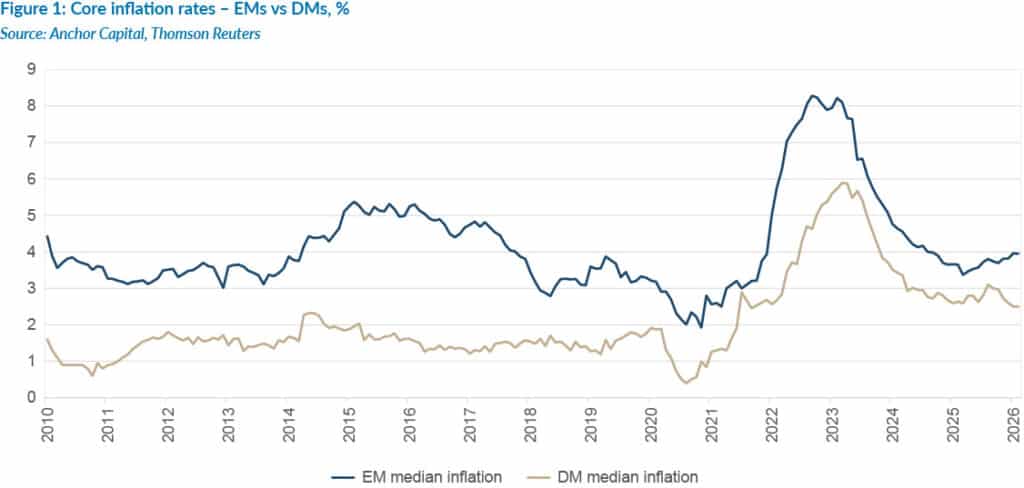
Historically, EM economies have experienced higher and more volatile inflation than developed markets (DMs). In recent years, however, EM inflation has largely converged toward DM levels (Figure 1). Several EM economies – including SA, Brazil, and Chile- have also lowered their inflation targets.
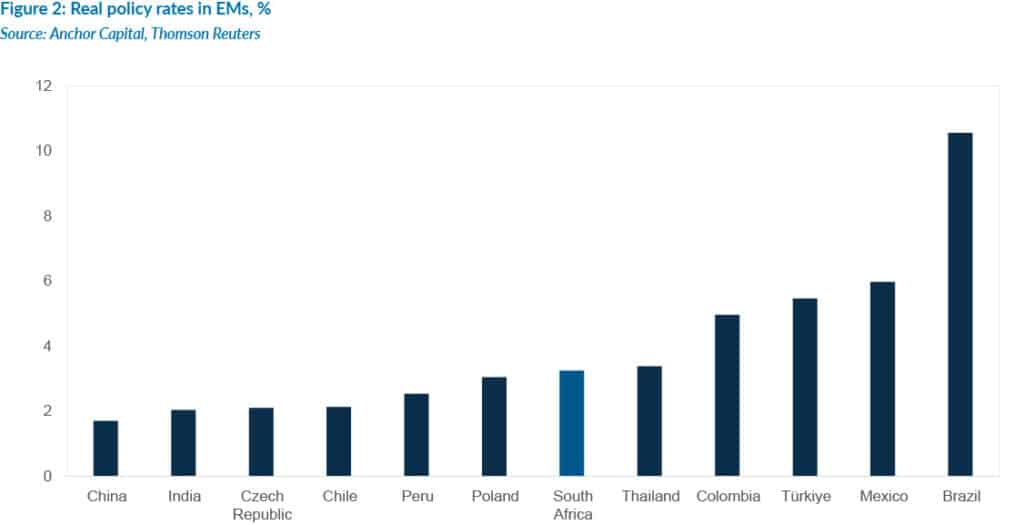
Importantly, many EM central banks responded to the post-COVID-19 inflation surge earlier and more aggressively than their DM counterparts. As a result, real policy rates across many EM economies remain elevated and in restrictive territory, providing a cushion against future inflation shocks (Figure 2).
Fiscal discipline has also improved across much of the EM universe. The large fiscal expansions seen during the pandemic have largely been reversed, with fiscal deficits in many economies returning to pre-pandemic levels – especially where fiscal sustainability is a concern. Together with tighter monetary policy, this helps anchor inflation expectations and support price stability, creating a favourable backdrop for EM bond performance.
Commodity tailwinds
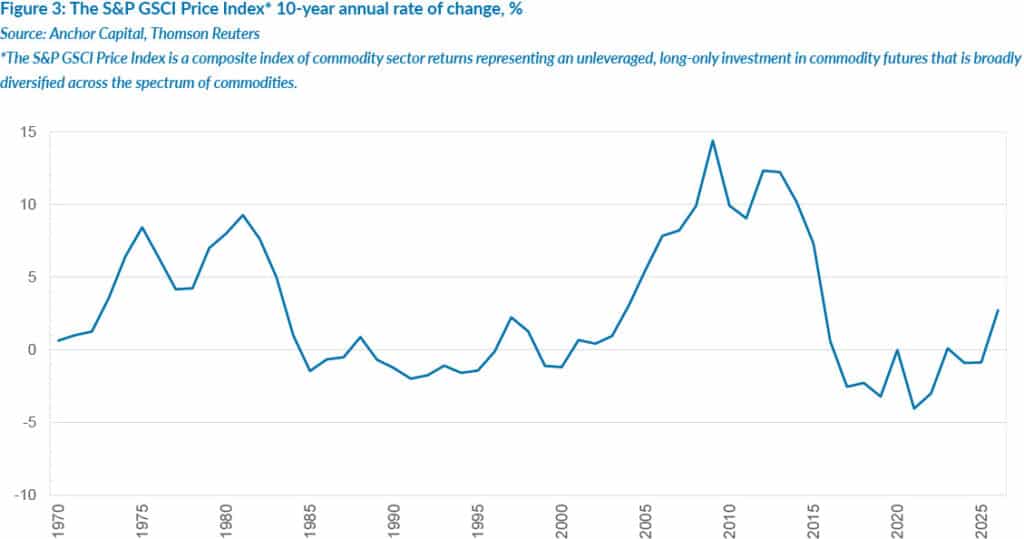
The second factor is commodity tailwinds. Commodity prices tend to move in long-term cycles – trough-to-trough fluctuations of roughly 15 years are associated with high business investment and infrastructure spending. Figure 3 shows that we are entering a period of firmer commodity prices, and we are constructive on commodities such as gold, silver and copper.
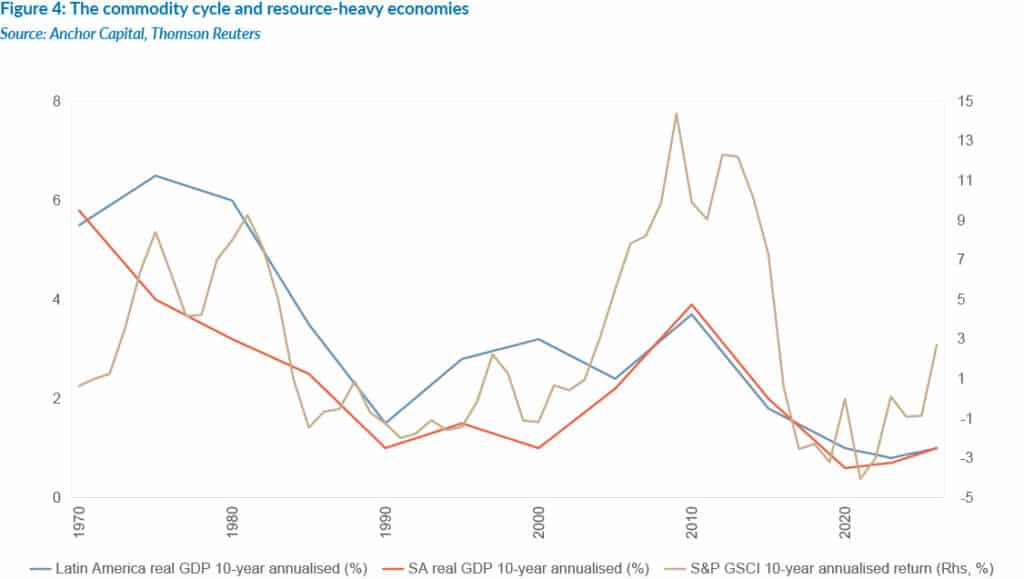
This emerging commodity cycle should support the growth outlook and asset prices of resource-heavy EM economies. The long-term growth paths of Latin American economies and SA have historically tracked the commodity cycle closely (Figure 4). Higher commodity prices improve terms of trade, strengthen fiscal positions, and support current account balances, all of which tend to support local bond markets.
Valuation and positioning
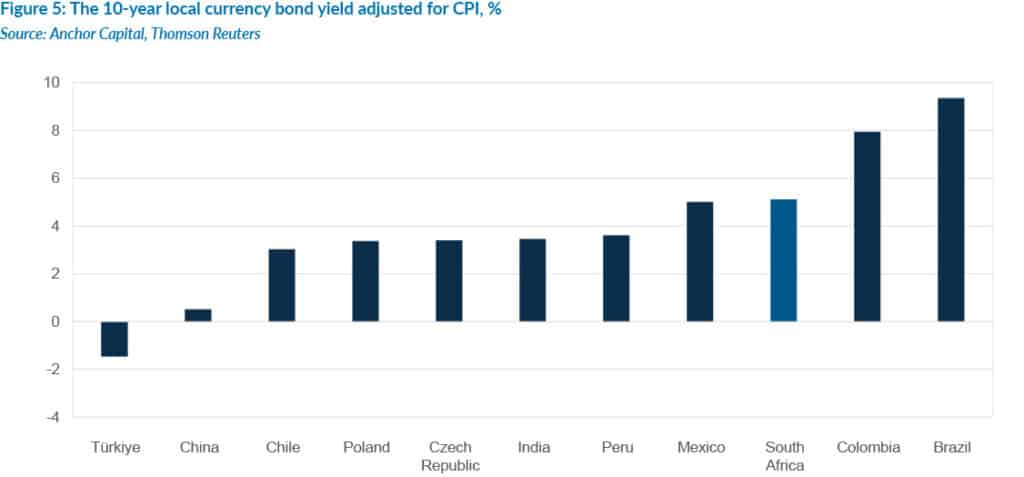
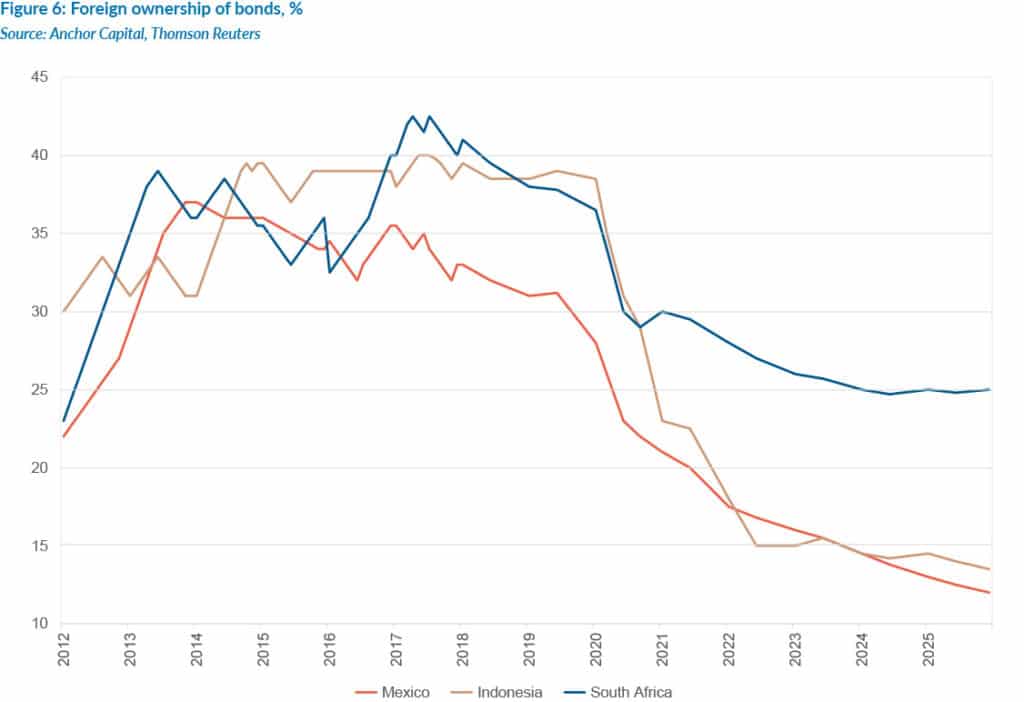
The third bullish factor supporting the EM bond outlook is valuation and positioning. Even after recent rallies, many EM local-currency bonds continue to provide attractive real yields compared with DM alternatives. In several countries, many 10-year local sovereign bonds still offer real yields above 4% (Figure 5). At the same time, foreign investor participation in EM local-currency bond markets has declined sharply in recent years, particularly in countries with high real yields and undervalued currencies (Figure 6). This means that many markets remain both undervalued and under-owned by global investors. When positioning is this depressed, even modest improvements in sentiment can lead to meaningful capital inflows.
Currencies also remain supportive. While some EM currencies have appreciated against the US dollar, many continue to trade below their long-term fair value, offering an additional potential source of return.
In our view, the current turbulence reflects merely a pause driven by geopolitical shock rather than a deterioration in underlying economic fundamentals, and we do not believe that it marks the end of the EM bull case. In the short term, war-related uncertainty warrants caution, and it will likely keep volatility elevated, particularly if energy markets remain disrupted. Nevertheless, the structural drivers supporting EM assets (improving macroeconomic policy, favourable commodity dynamics and attractive valuations) remain firmly in place. If geopolitical tensions ease, EM assets could recover quickly as investors refocus on these fundamentals. For long-term investors, the current volatility may ultimately prove to be a pause in the EM recovery rather than the end of it.