
Financial markets were shaken by the US/Israel alliance’s 28 February military strikes on Iran and that country’s subsequent closure of the Strait of Hormuz, a critical global energy transit route. It triggered what the International Energy Agency (IEA) described as the largest supply disruption in the history of the global oil market. The resulting increase in oil prices, together with concerns around potential supply disruptions and the impact on global inflation, has weighed on asset prices. The on-again, off-again ceasefire has developed into a signed 14-point agreement to end the conflict. The Islamabad Memorandum of Understanding is a framework agreement between the US and Iran aimed at ending the war. Brokered by Pakistan, the pact initiated a 60-day diplomatic window to negotiate a permanent peace settlement. While financial markets are pricing an eventual resolution to the conflict, the inflationary shock from higher oil prices is expected to linger for much of 2026.
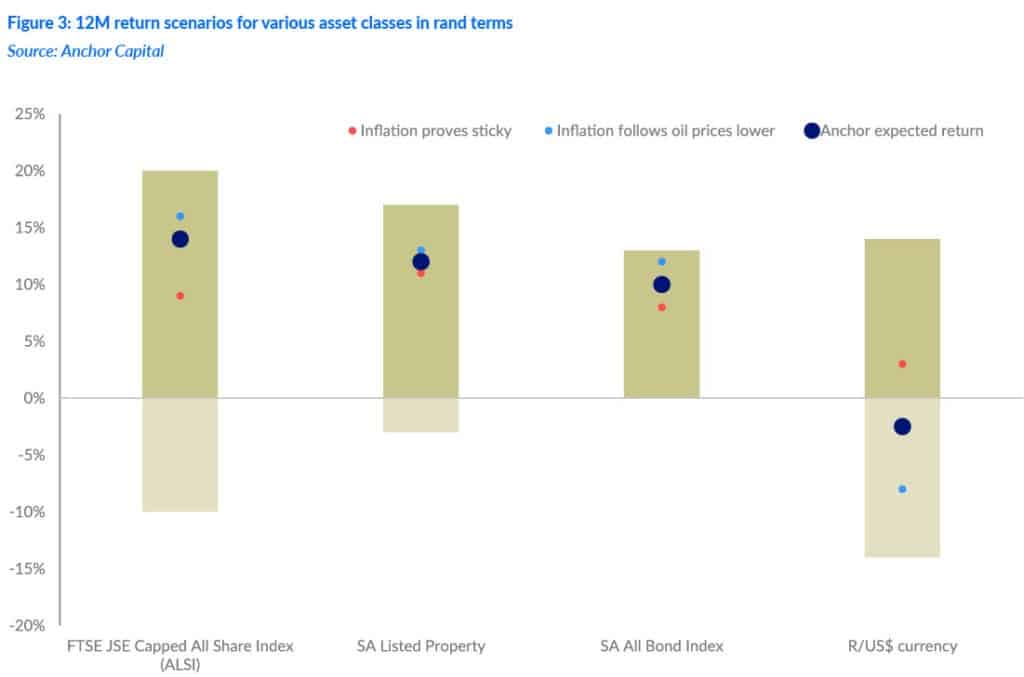
Figure 1 below highlights the US dollar return outlook for the various global asset classes. The bars in Figure 1 represent the reasonable range of possible outcomes, with the dots indicating our estimated outcomes under various scenarios. We have become more positive on equities, and we maintain our positive outlook on alternatives. We remain neutral on bonds, corporate credit, listed property and cash given the attractive returns available from equities.
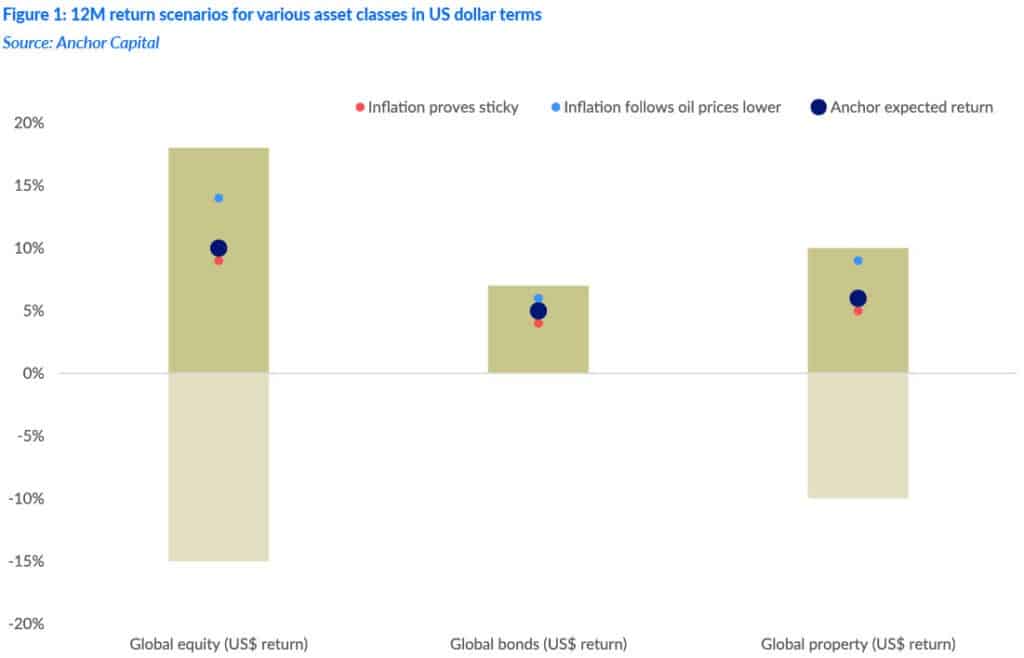
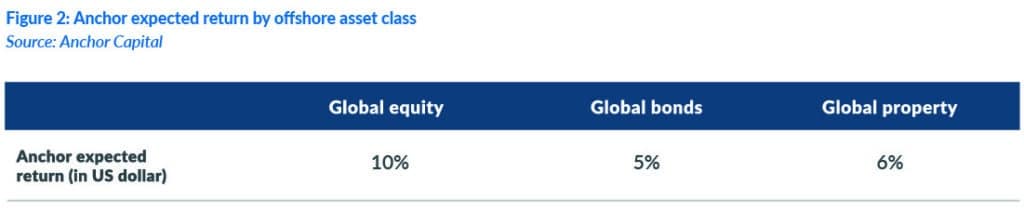
Figure 3 below outlines the rand return outlook for several domestic asset classes. The bar represents the reasonable range of possible outcomes, with the dots indicating our estimate of the outcome under various scenarios. From a domestic perspective, we have also remained positive on alternatives, whilst becoming positive on equities given the superior returns on offer. We are neutral on bonds and listed property, while maintaining a negative stance on cash.