

ECONOMICS
The defining macroeconomic development of 2Q26 was not simply the conflict in the Middle East but the rapid repricing of geopolitical risk as the quarter progressed. What initially appeared to be a significant global energy supply shock ultimately evolved into a sharp reversal in oil prices, materially improving the outlook for inflation, monetary policy and financial markets.
The escalation of tensions in the Middle East drove Brent crude oil prices above US$118/bbl during March, approximately 63% above pre-conflict levels, as markets priced in the possibility of supply disruptions through the Strait of Hormuz. Given that roughly one-fifth of global oil consumption and c. 30% of seaborne oil trade passes through this strategic waterway daily, the episode once again highlighted the vulnerability of global energy markets to geopolitical shocks and the significant influence that oil prices continue to exert over inflation expectations and monetary policy.
Market sentiment improved meaningfully towards quarter-end. A 60-day ceasefire framework announced between the US and Iran eased immediate concerns over global energy supply disruptions, while tanker traffic through the Strait recovered far more quickly than anticipated. As fears of prolonged supply shortages eased, geopolitical risk premiums unwound rapidly, and Brent crude oil prices declined to below US$73/bbl by the end of June, retracing much of its earlier rally and ending the quarter 38.4% lower.
Although geopolitical risks remain elevated, the moderation in oil prices has materially improved the macroeconomic outlook. Negotiations in the region remain fragile, and any renewed disruption to energy supply could once again reignite inflation concerns and increase market volatility.
In the US, monetary policy expectations continue to be shaped primarily by resilient economic activity, a robust labour market and sustained investment in artificial intelligence (AI). Although inflation remains above the US Federal Reserve’s (Fed) 2% target, much of the recent acceleration reflects higher energy costs rather than a broad-based increase in underlying demand. Since taking office, new US Fed Chair Kevin Warsh has reaffirmed the central bank’s commitment to returning inflation to its 2% target. This has reduced the perceived policy easing bias and strengthened expectations that interest rates could remain higher for longer if inflation proves sticky. These expectations have supported US Treasury yields and the dollar throughout much of the quarter, creating a more challenging backdrop for emerging market (EM) assets.
Europe faces a similar, albeit more challenging, policy environment. Elevated energy costs and lingering inflationary pressures prompted the European Central Bank (ECB) to raise its key policy rate by 25 bpts in June. At the same time, business activity softened amid heightened uncertainty and subdued external demand, while labour market conditions have shown early signs of deterioration. Although inflation remained above pre-conflict levels, the sharp decline in oil prices towards quarter-end has helped ease some immediate inflation risks. The combination of moderating inflation and weakening economic activity suggests that the ECB may face an increasingly delicate balancing act between containing secondary inflation and supporting economic growth.
In South Africa (SA), inflationary pressures have picked up in recent months, with headline inflation, as measured by the consumer price index (CPI), accelerating to 4.5% YoY in May, up from 3.1% YoY in March. The inflation impulse has been driven primarily by energy costs, with fuel inflation rising sharply to 28.7% YoY in May. While fuel remains the dominant driver, services inflation has remained elevated, although food inflation has continued to moderate. Looking ahead, risks to the inflation outlook remain skewed to the upside. Potential second-round effects from earlier fuel price increases, adverse weather conditions including El Niño, and renewed energy market disruptions could all place upward pressure on inflation.
The recent correction in global oil prices, which is lowering pressure on central banks to maintain restrictive monetary policy and supporting expectations for lower interest rates in the near term, will likely reinforce the appeal of gold as a safe-haven asset. The gold price has remained elevated at around US$4,000/oz, albeit down c. 25% from its January high. For SA, higher gold prices continue to provide an important source of export earnings and support for the country’s terms of trade. Combined with easing energy costs, this should provide a favourable backdrop for the rand.
This past quarter also marked an important milestone for SA’s sovereign credit profile. Fitch Ratings upgraded the country’s long-term foreign and local currency credit rating to BB, while Moody’s revised its outlook to Positive from Stable. These developments reflect improving fiscal metrics, ongoing fiscal consolidation efforts and continued progress on structural reforms. Provided the policy trajectory is maintained, we expect further sovereign credit rating upgrades to BB+ from all three major rating agencies in 2027.
In summary, 2Q26 demonstrated how quickly market sentiment can shift when geopolitical risks begin to recede. While the Middle East conflict initially raised fears of a prolonged energy shock and renewed inflation, the sharp correction in oil prices by quarter-end materially improved the outlook for both inflation and interest rates. Although geopolitical uncertainty remains elevated, the broader macroeconomic backdrop has become more constructive. Lower energy prices, resilient global growth, improving domestic fiscal fundamentals and supportive commodity prices provide a favourable environment for risk assets over the medium term.
SA EQUITIES
Our conviction in SA equities strengthened during 2Q26, prompting us to move overweight local equities in our strategic asset allocation. We forecast a total return of approximately 14% over the next 12 months, supported by improving domestic fundamentals, attractive valuations and the potential for a less restrictive US interest-rate environment than is currently reflected in market pricing.
While both the FTSE/JSE Capped All Share Index and the MSCI South Africa Index declined by 2.4% in 2Q26, significantly underperforming the MSCI Emerging Markets (+24%) and the MSCI World (+14%) indices, the headline index returns obscure a far more encouraging underlying picture. The weakness was concentrated in a relatively small number of globally exposed companies rather than reflecting a deterioration in SA’s domestic investment outlook. By contrast, SA government bonds (and the rand) remained resilient, and a bellwether for domestic equities, the FTSE/JSE Banks Index, advanced by 9.8%, reflecting continued confidence in the local macroeconomic backdrop.
Much of the weakness in the local equity market was driven by global rather than local factors and was concentrated in a handful of large index constituents. Gold and platinum group metal (PGM) producers came under pressure as higher US real yields weighed on precious metal prices. At the same time, Tencent, Naspers/Prosus’ single largest asset, declined by around 10% as global investors redirected capital towards the large Asian semiconductor beneficiaries of the AI investment cycle, including Taiwan Semiconductor Manufacturing Company (TSMC), Samsung and SK Hynix. Given the significant weighting of resources and the Prosus/Naspers complex on the JSE, these moves masked the relative strength seen across much of the domestic market.
The market’s attention remained firmly focused on global risks throughout the quarter. Escalating tensions in the Middle East pushed oil prices above US$100/bbl, reigniting concerns around inflation and delaying expectations for global interest rate cuts. While these developments understandably affected investor sentiment, they had surprisingly little impact on SA’s financial markets beyond the equity index itself. The resilience of the rand and the strength of the local bond market suggest investors continue to recognise the progress being made domestically.
SA fiscal outcomes have also consistently surprised to the upside, government debt appears to be stabilising sooner than previously anticipated, and the country’s sovereign credit profile continues to improve. Electricity supply has become materially more reliable, private sector investment in energy infrastructure continues to accelerate, and reforms aimed at improving logistics and transport networks are gradually gaining traction. None of these developments is transformational for economic growth in isolation, but collectively they are steadily improving the operating environment for SA businesses. In our view, the market has been quick to discount global risks while giving relatively little credit to the structural improvements taking place within the domestic economy.
For investors, the more important question is therefore not whether JSE-listed equities appear cheap (they clearly do), but whether expectations have become overly pessimistic. Equity markets rarely rerate simply because valuations are low; they rerate when corporate earnings prove more resilient than investors anticipate. We believe that possibility appears increasingly likely.
Consensus expectations for domestic earnings remain relatively subdued despite a more supportive macro backdrop, improving business confidence and the prospect of gradually strengthening economic activity over the next year. Financial companies remain particularly well placed to benefit from this environment. Strong balance sheets, resilient credit performance and improving economic confidence provide a solid foundation for earnings growth, while declining sovereign risk should continue to support valuations. Beyond financials, a number of high-quality industrial businesses continue to demonstrate an impressive ability to grow earnings despite a challenging operating environment.
The divergence between the recent underperformance of the headline index and underlying corporate fundamentals therefore says more about its composition than about the health of corporate SA. With almost half of the index (by market cap) represented by globally exposed businesses, movements in commodity prices, US real yields and international capital flows can overwhelm domestic fundamentals over shorter periods. This often creates opportunities for long-term investors to buy quality domestic businesses at attractive valuations when sentiment has weakened rather than when business prospects have deteriorated.
Looking ahead, we believe the balance of risks has shifted increasingly in favour of SA equities. The domestic economy is improving from a low base, inflation remains contained, fiscal credibility has strengthened, and structural reforms continue to move in the right direction. Simultaneously, market expectations remain conservative, particularly for domestically focused cyclical businesses, creating scope for positive earnings surprises if current trends persist.
This is not to suggest that global risks have disappeared. The outlook for global interest rates, geopolitical tensions and commodity prices will continue to drive periods of market volatility. However, these risks are increasingly well understood and, in our view, appear largely reflected in current valuations. In contrast, we believe that the market continues to underestimate the cumulative impact of improving domestic fundamentals on corporate profitability over the medium term.
As long-term investors, our focus remains on identifying high-quality businesses with sustainable competitive advantages, disciplined management teams and the ability to compound earnings through the cycle. We believe the current environment offers an increasingly attractive entry point for those businesses. Accordingly, we are positioning portfolios to benefit from what we expect will be a stronger period of returns for SA equities over the next twelve months.
DOMESTIC BONDS
The easing in Middle East tensions during 2Q26 is unambiguously positive for financial markets and supportive of bonds. Oil prices have fallen back to around pre-conflict levels as geopolitical tensions eased, reducing global inflationary pressures. In response, SA government bond (SAGB) yields declined significantly over the quarter, with the FTSE/JSE All Bond Index (ALBI) returning 7.87% in 2Q26 (Figure 1). Despite the sell-off experienced in 1Q26, the ALBI has delivered a solid 4.25% return over the first half of 2026, primarily driven by long-dated government bonds – a segment of the curve we have consistently favoured for the past 12 months (Figure 1).
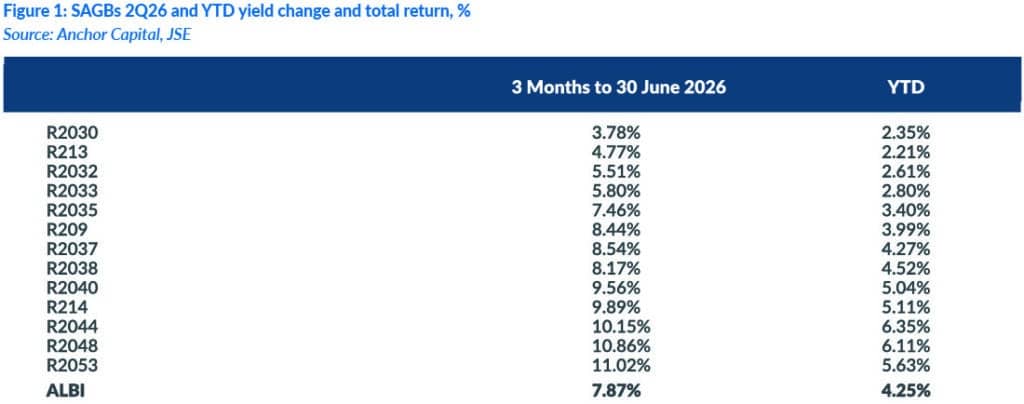
We remain constructive on SAGBs, particularly long-dated bonds. Improving domestic macroeconomic fundamentals, easing inflation expectations, and attractive carry and rolldown continue to support this segment of the curve. While near-term inflation risks remain, we believe the medium-term outlook has become increasingly favourable.
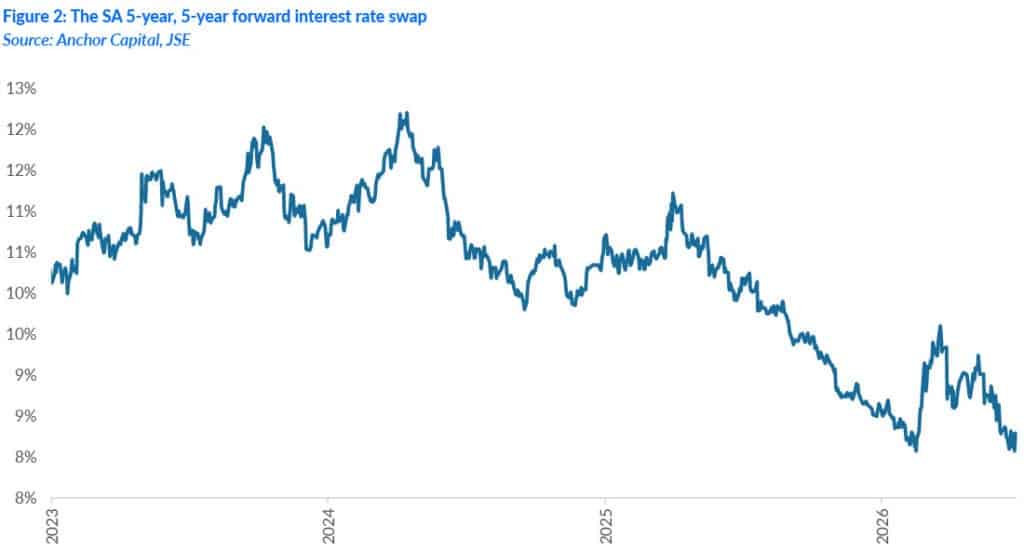
The easing in geopolitical tensions has already been reflected in market pricing. SA’s 10-year breakeven inflation rate (BEIR) has retraced to around 4.3%, close to pre-conflict levels. Similarly, the 5-year, 5-year forward interest rate swap, a useful proxy for long-run policy rates, has fallen back to c. 8% (Figure 2), suggesting that the geopolitical risk premium embedded in long-term interest rates has largely unwound. Market expectations for monetary policy have also shifted, with the expected peak in the SA Reserve Bank (SARB) policy rate falling from around 7.75% before the peace agreement to approximately 7.25% currently.
There is an increasing risk that the post-war rebalancing will push the oil market into a supply glut over the coming quarters. Supply is recovering as energy flows through the Strait of Hormuz continue to normalise, and Gulf producers restore output. OPEC’s core Gulf producers retain significant spare capacity and have an increasing incentive to raise production beyond pre-conflict levels. Output from non-Gulf OPEC+ producers, particularly Russia and Kazakhstan, has already begun rising, while non-OPEC+ production is expected to rise further in 2026, led by the US, Canada and Brazil. At the same time, both the IEA and Energy Information Administration (EIA) have revised down global oil demand forecasts as activity in China and India softens. The combination of higher supply and weaker demand is likely to exert downward pressure on oil prices, reinforcing the global disinflationary backdrop.
We believe the recent firmness in US inflation is primarily the result of temporary supply-side shocks rather than stronger underlying demand. Demand-driven inflation pressures continue to moderate, which should allow the Fed to look through the near-term inflation noise and keep policy rates on hold. As these temporary shocks fade, we expect disinflationary pressures to re-emerge faster than markets anticipate, causing the rate hike expectations currently priced into the US interest rate curve to diminish. Lower US Treasury yields, together with softer oil prices, would provide an additional tailwind for SAGBs.
Domestic fundamentals also continue to improve. SA has seen further credit rating upgrades during 2026, fiscal dynamics continue to strengthen, structural growth constraints have eased, and SA’s external position remains supportive. While fiscal risks have not disappeared, these developments have contributed to a gradual reduction in the sovereign risk premium embedded in government bond yields.
Against this backdrop, we continue to favour the 15–25-year segment of the SAGB curve. This part of the curve offers the most attractive combination of carry and roll-down opportunities due to the pronounced hump in the zero-coupon curve. More broadly, SAGBs continue to offer some of the highest real and nominal yields across EMs. In contrast, the fiscal risk premium embedded in yields continues to narrow. Overall, we expect domestic bonds to deliver total returns of around 10% over the next 12 months.
THE RAND
The second quarter of 2026 was marked by the extraordinary events around the US-Israel/Iran war and the closure of the Strait of Hormuz, through which c. 34% of the global crude oil trade passed in 2025. This resulted in an unprecedented spike in oil prices, as Brent crude futures jumped to US$76/bbl, peaking near US$126/bbl during the height of the conflict (by July the oil price had dropped to around US$73/bbl – 40% down from its late-March peak). Since the start of the conflict, US President Donald Trump has declared 39 times that the war was won and that there was a peace agreement, only to walk back those comments a few days later. As of 17 June, we have a signed 14-point memorandum of understanding which seems to have allowed oil to flow through the Strait once again. Despite these headwinds, the rand has demonstrated notable resilience. At the time of writing, the local unit was trading ZAc21 firmer against the US dollar relative to its level at the start of 2026.
At Anchor Capital, we subscribe to a purchasing power parity (PPP) model for the long-term value of the rand. Over the past three years, the rand has been on a gradual recovery path from significantly oversold levels. This has been supported by a combination of the US dollar gradually losing its value against other currencies, improved terms of trade with domestic exports being more valuable globally, and a steady improvement in SA’s political and economic fundamentals. While this overall positive trend remains intact, it has been overshadowed in the near term by heightened global geopolitical uncertainty, as can be seen in Figure 3.
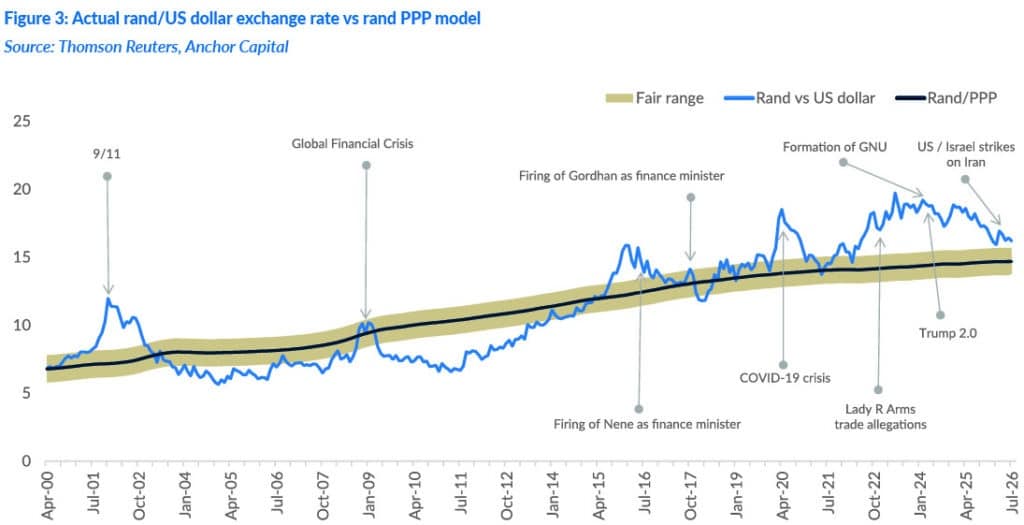
Forecasting the value of the rand in a year is a fool’s errand, as the local unit usually trades within a R2.00 range against the US dollar over 12 months. The risk of negative surprises to one’s view is particularly high at the moment, and the rand could quite easily be weaker than R18.00/US$1 this time next year.
That said, if we look at this rationally and consider a scenario where the war will probably end within the next year and some recovery is likely, we think that a level of around R16.00/US$1 appears reasonable. This reflects a combination of continued improving domestic fundamentals, a potential rally as inflation declines and the likely higher risk premium applied to EMs for a while after the cessation of hostilities in the Middle East.
GLOBAL EQUITIES
We remain positive on global equities over the next 12 months, supported by one of the strongest corporate earnings environments in more than a decade. The shape of the global economy is changing, driven by unprecedented investment in technological change (AI and digital infrastructure), which represents a structural rather than cyclical shift in global capital expenditure. This should see very strong earnings growth (particularly in the US), which should underpin continued strong performance from equities. Against this backdrop, we forecast a 10% return from global equities in the next 12 months, as the bull market which began in 2023 continues.
While this projection means the current bull market will extend into a fifth year, which is long, we believe a fundamental structural shift in the global economy is driving the expansion. Global AI-related capex spending is expected to exceed US$1trn in 2027, following an estimated US$700bn in 2026. By the end of 2026, it is expected that three new listings (SpaceX [already listed], Anthropic and OpenAI) will be among the top ten biggest companies (by market capitalisation) in the world.
The strength of this earnings cycle is evident in consensus forecasts for the S&P 500 (see Figure 4 below). US earnings are forecast to grow by around 28%, 17% and 13% in each of the next three years, which is significantly higher than the average of 8% for the past 25 years. Although the 28% growth in the next 12 months is somewhat inflated by revaluations on AI-related investment gains among the big tech companies, earnings growth remains comfortably above 15% even if this is excluded.
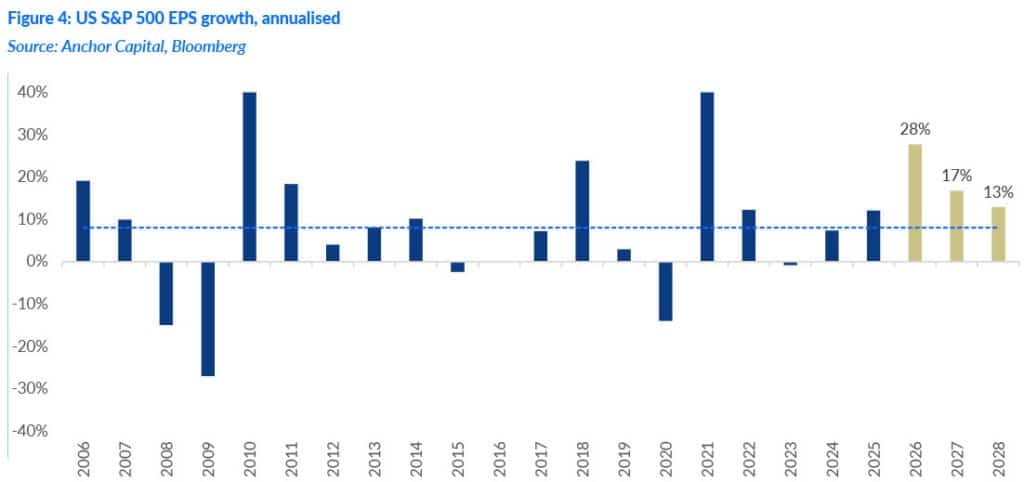
The earnings backdrop above is the key driving force behind markets, but the nature and speed of change will mean elevated market volatility. Segments of the market have already raced ahead in expectation, and the path forward will not be smooth. When a trend is moving so quickly, the risk of over-investment is high for certain companies, and share selection will become increasingly important. The volatility might scare more cautious investors, but we firmly believe you have to stay on board and remain invested during this phase of AI.
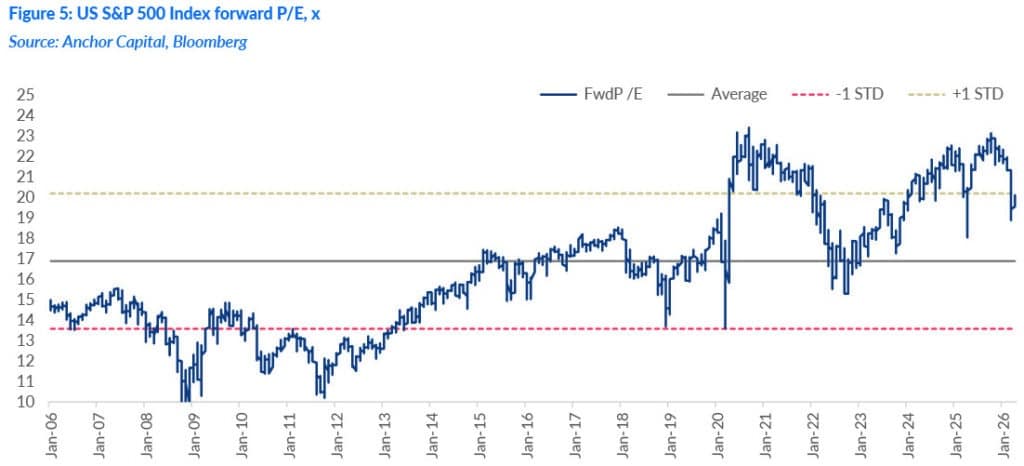
Importantly, although markets have been strong for a few years, the forward valuation of the S&P 500 (20x) is reasonable, because the market rally has been backed up by earnings growth. Continued earnings growth over the next year would take it back to its mean P/E of the past 20 years.
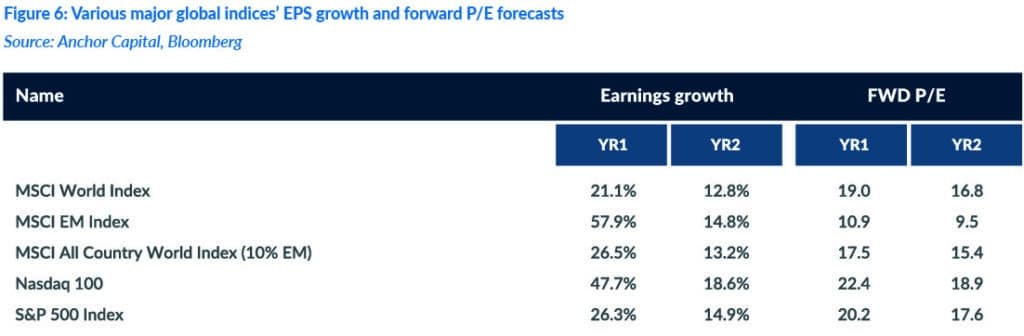
Outside the US, earnings expectations remain constructive, and the table below shows the high level of projected earnings growth across the world for the next two years. EMs are clearly where the value sits, but these markets have flattered to deceive for the past two decades. Therefore, rather than pursuing broad EM exposure, we continue to favour carefully selected individual companies with compelling structural growth opportunities and strong competitive positions, of which there are many we have identified.
It is unusual to have reached this stage of a macro investment overview without mentioning the Iran war, Trump and interest rates. They remain very important to markets, but the market has largely looked through their impact over the past six months, in the belief that it is transitory.
The world is collectively disappointed that the Iran war continues and geopolitical risk remains high. The oil price at the beginning of March was around US$60/bbl, and this subsequently rose to a peak of US$125/bbl, before recently declining to around US$75/bbl. This has seen inflation rise in recent months but more recently at a more muted pace. This will continue for some months to come, before sharply declining into 2Q27. Market consensus is for at least one 0.25% interest rate hike in the US, followed by declines into 2027. Interest rates are at high and restrictive levels, which are being absorbed by the strong underlying economic growth. As rates decrease next year, they will provide further stimulus for sustained growth.
It would be naïve to suggest that risks are not elevated, but we take the view that the war and oil scenario will play itself out and oil prices will return to pre-war levels over the coming months. There is certainly a possibility that high oil prices (and inflation) will be sustained for longer than is comfortable, and hence the equity journey could be a volatile one. However, we must remember that there is more than enough oil in the world, and that this situation is one of logistics rather than an underlying supply/demand balance.
When we look out over a 12-to-24-month horizon, the combination of strong earnings growth, resilient economic activity, and improving valuation support provides a solid foundation for higher equity markets.
The graph below shows the steady pace of world economic growth, which is the stage on which equity markets perform.
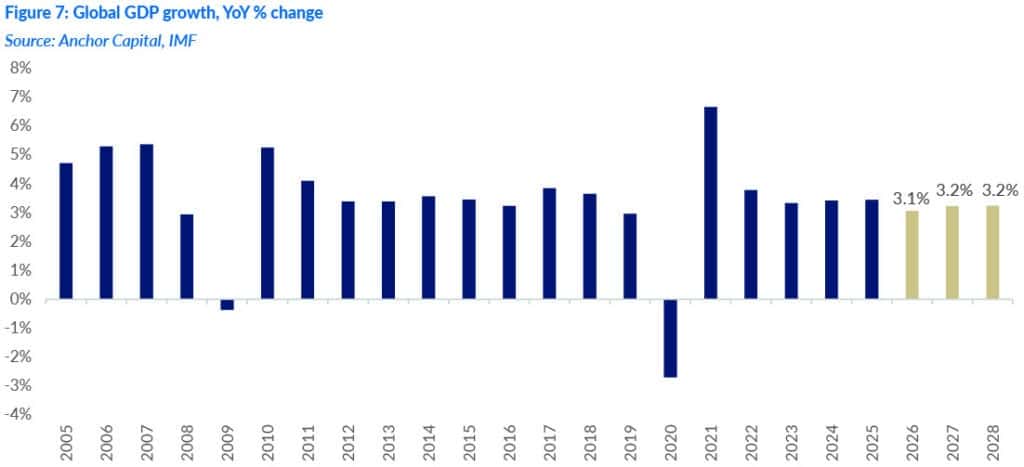
Economic growth outside the US is likely to remain more uneven. Europe continues to face structural challenges and remains particularly vulnerable given its reliance on imported energy, while EMs were gaining favour in the pre-war, risk-on global mood; they are likely to attract a higher risk premium following the recent increase in geopolitical uncertainty. Even so, the global growth outlook remains sufficiently resilient to support continued earnings expansion, which we believe will remain the primary driver of equity market returns. We therefore remain constructive on global equities over the next 12 months, while recognising that disciplined stock selection and a focus on high-quality businesses will become increasingly important as the current market cycle matures.
GLOBAL BONDS
US 10-year government bond yields hovered around the top end of their recent 4% to 4.5% p.a. range for most of 2Q26, despite inflation expectations moderating materially in the wake of the announcement that the US and Iran had signed a 14-point interim peace deal (the Islamabad Memorandum) in mid-June.
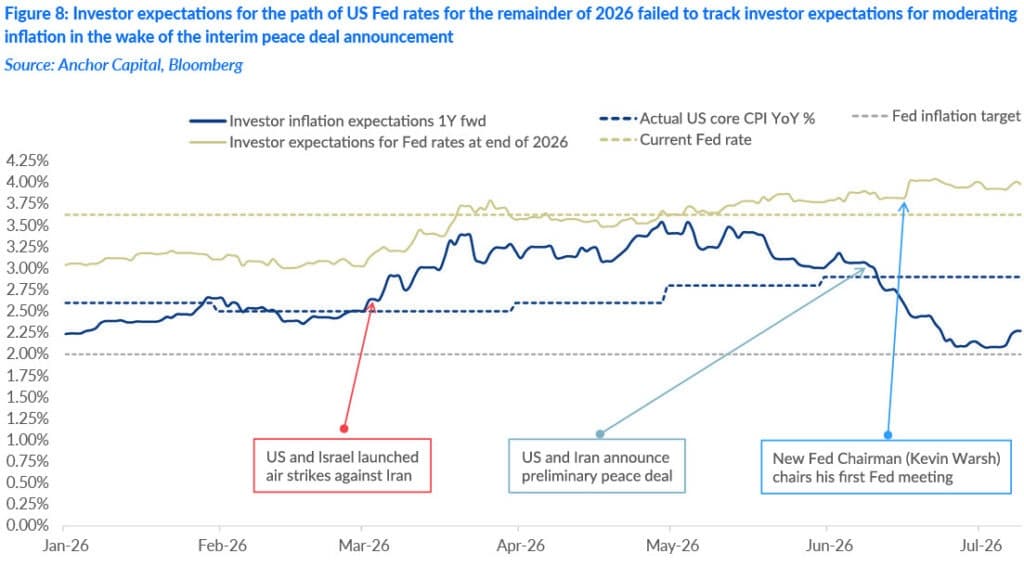
The mid-June interim peace deal announcement pushed the price of Brent crude oil back towards the US$70/bbl level it was trading at before the US and Israeli strikes on Iran shut down the Strait of Hormuz, the world’s most important oil chokepoint. The falling oil price also pushed investors’ one-year forward inflation expectation back towards the US Fed’s 2% target level. Despite the improving outlook for inflation, investors were reluctant to price in the possibility of lower US central bank rates. In fact, in the days following the announcement of the interim peace deal, Trump’s newly appointed Fed chair, Kevin Warsh, chaired his first Fed meeting. The tone set by Warsh at his first press conference as Fed chair was decidedly hawkish. Instead of ushering in hopes for lower US interest rates that Trump has been calling for, investors started to position for an extra rate hike in 2026, pushing the anticipated Fed funds rate at the end of 2026 to 4% p.a.
We believe that the transit of energy supplies through the Strait will remain mostly uninterrupted for the foreseeable future, allowing the world’s energy reserves to be restocked and inflation expectations to remain subdued. This should in turn lead to investors positioning for the 3% p.a. Fed rates that they were anticipating in February before the airstrikes were launched against Iran. As that happens, we expect the US government’s 10-year funding rate to retreat from the top of the 4% to 4.5% p.a. band, which will deliver US 10-year government bond investors some capital gains in addition to income earned for a total return of c. 5% in US dollar terms over the next twelve months.
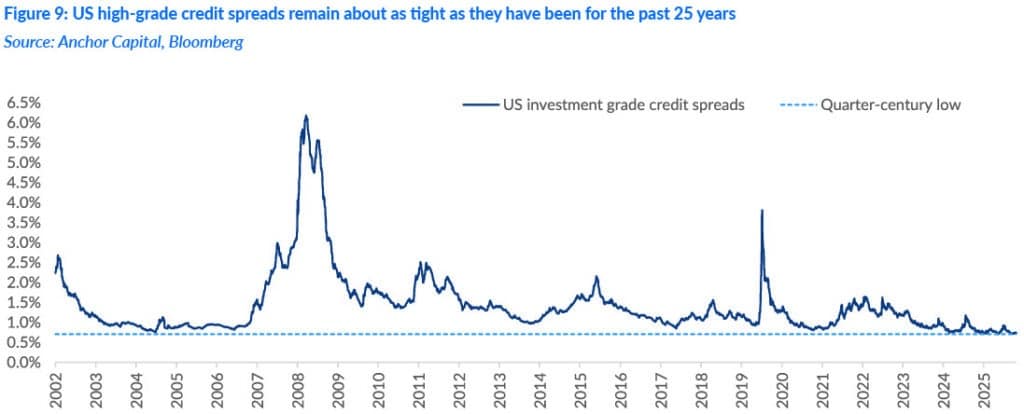
For US investment-grade corporate bond investors, the premium they are being paid to take on default risk for corporate lending remains at historic lows. While credit spreads can remain depressed for extended periods, we think it is prudent to anticipate some widening of credit spreads. This is likely to offset any benefits from slightly lower rates, leaving investors in these high-grade bonds with returns predominantly from interest income of c. 5% in US dollar terms over the next year.
GLOBAL PROPERTY
Developed market (DM) real estate investment trusts (REITs) anticipated dividend yields remain as unattractive as they have been relative to bond yields in around two decades (i.e. since before the global financial crisis [GFC]).
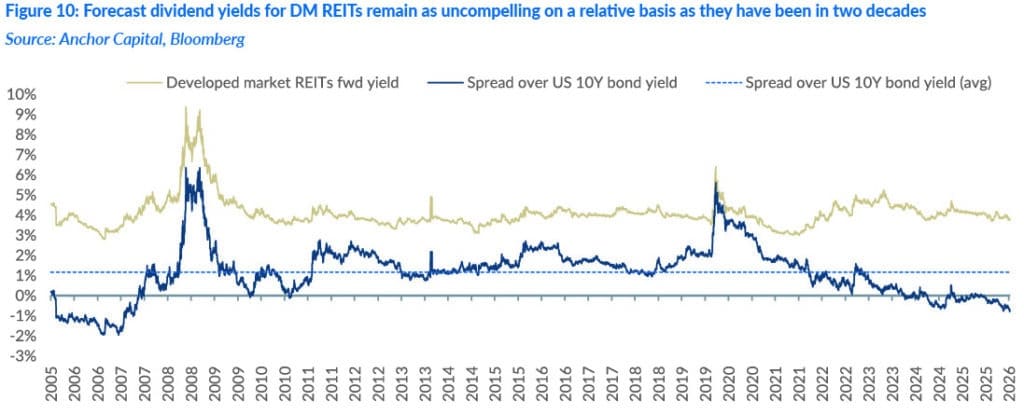
The deterioration in relative yield has happened as US rates have drifted marginally higher YTD (+0.3%) while REIT forward dividend yields have compressed (-0.6%).
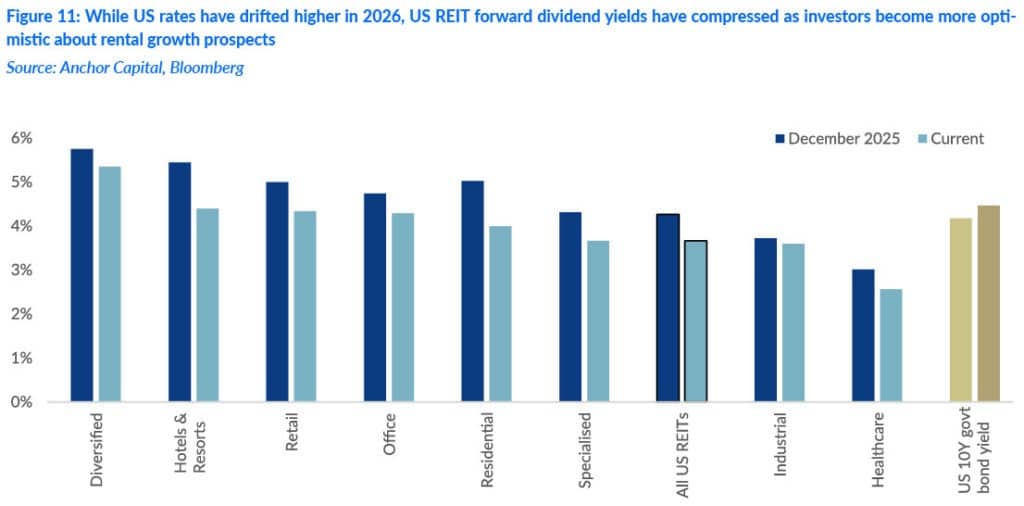
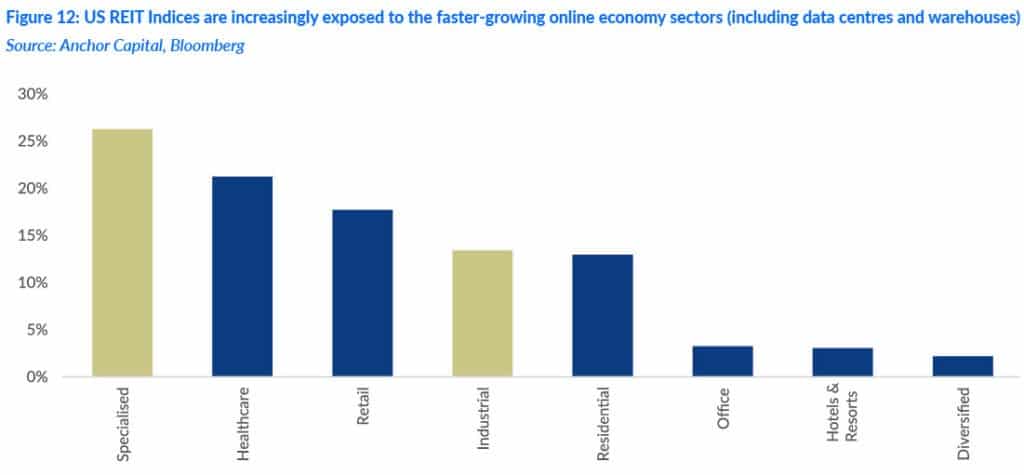
The former is at least partially a function of increased inflationary concerns, the latter largely a function of increasing optimism around commercial property rental growth, particularly as REIT indices are increasingly exposed to the faster-growing online economy sectors (data centres and warehousing).
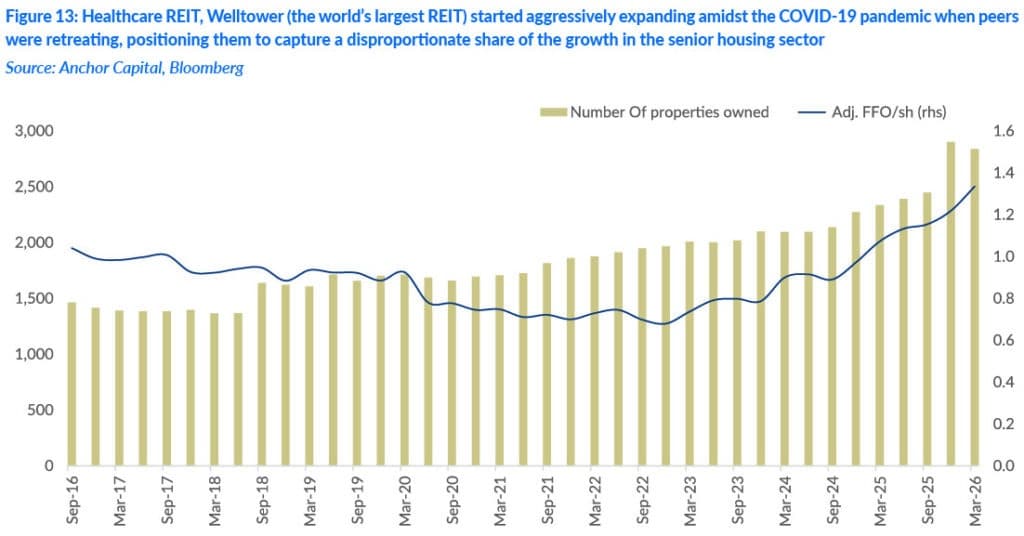
The sector that stands out is healthcare REITs with a forward dividend yield of 2.6%. This is largely an idiosyncratic story, with sector heavyweight Welltower (the world’s largest REIT by market cap at US$165bn), now trading on a forward dividend yield of just 1.3%. The fundamental catalyst was CEO Shankh Mitra’s contrarian bet during the pandemic. Welltower deployed over US$40bn in senior housing acquisitions between 2020 and 2026 (while peers retreated), doubling the number of senior-living properties owned. As occupancy rates recovered and senior housing fundamentals strengthened — driven by ageing demographics and limited new supply — the market re-rated the company from a distressed REIT to a high-growth operating platform, compressing the yield accordingly.
The asset class looks fully priced at a 3.7% forward dividend yield, particularly relative to bond yields on offer, and we think the relative yield needs to compress. Some of that compression will come from falling bond yields, but we expect a 2% to 3% derating to push forward dividend yields on the REIT index to around 3.8%. We also expect c. 5% of income growth, and that combination will leave investors with a total return in US dollars over the next year of c. 6%.