

Near-term US inflation is likely to remain volatile as tariffs and geopolitical tensions keep supply-side price pressures elevated. However, these shocks should prove temporary and are unlikely to result in persistently higher inflation. In contrast, demand-driven inflation has cooled materially since 2023, reducing the risk of a broad-based, self-reinforcing inflation cycle. At the same time, an AI-driven productivity boom is expanding the economy’s ability to produce goods and services, allowing output to grow faster without a corresponding rise in inflation. This combination points towards a period of disinflationary growth, where US economic activity remains resilient while inflation gradually moves lower.
The bigger picture is that the US inflation problem is increasingly one of temporary supply shocks rather than excess demand. Cooling demand, fading supply disruptions and productivity-led supply expansion all point to a more benign medium-term inflation outlook. In our view, disinflationary pressures are likely to re-emerge faster than the US Federal Reserve (Fed) anticipates, supporting an extended pause in policy rates and increasing the likelihood that the next meaningful move for interest rates is lower, rather than higher, in 2027.
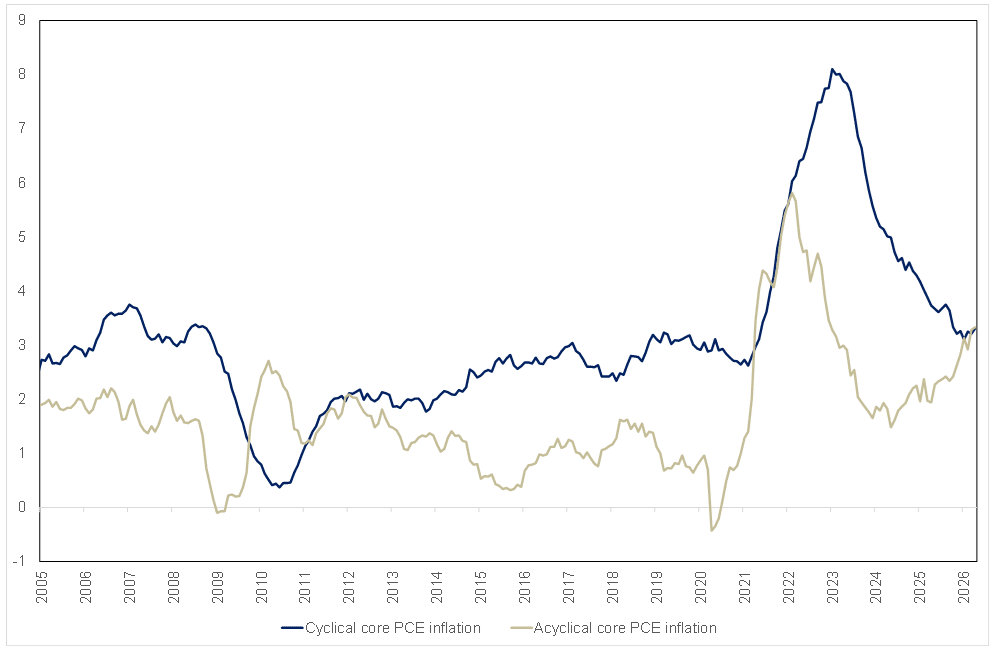
Figure 1: US core PCE cyclical and acyclical, YoY % growth
Source: Federal Reserve Bank of San Francisco, Anchor Capital
The recent reacceleration in core personal consumption expenditure (PCE) inflation largely reflects a series of adverse supply shocks, including tariffs and disruptions to global energy markets.
To distinguish between demand- and supply-side inflation pressures, the Federal Reserve Bank of San Francisco separates core PCE inflation into two components, as shown in Figure 1.
- Cyclical core PCE inflation captures the demand-sensitive portion of inflation that tends to move with the business cycle and labour market conditions.
- Acyclical core PCE inflation reflects price pressures that are largely insensitive to economic activity and are more heavily influenced by supply-side factors such as tariffs, energy costs and geopolitical disruptions.
This decomposition suggests that the inflation problem confronting the Fed has fundamentally changed. Cyclical core PCE inflation has fallen sharply from its 2022 peak and is now close to pre-pandemic norms, indicating that restrictive monetary policy has successfully cooled demand-side pressures. In contrast, the recent firmness in inflation has been concentrated in acyclical components that are largely beyond the influence of interest rates and should gradually fade over time.
Importantly, there is little evidence that current supply shocks are feeding into a broader inflation problem through wages, inflation expectations or other second-round effects.
US wage growth continues to moderate, breakeven inflation rates have largely retraced to pre-war levels, and longer-dated breakevens are even lower than they were before the start of the Middle East conflict. Supercore inflation (which excludes food, energy, and housing costs from core inflation) is now close to 2%, shelter inflation will be resuming its disinflationary trend, and unit labour cost growth has fallen below 2%.
Collectively, these indicators suggest that underlying inflation pressures are considerably more benign than headline readings may imply.
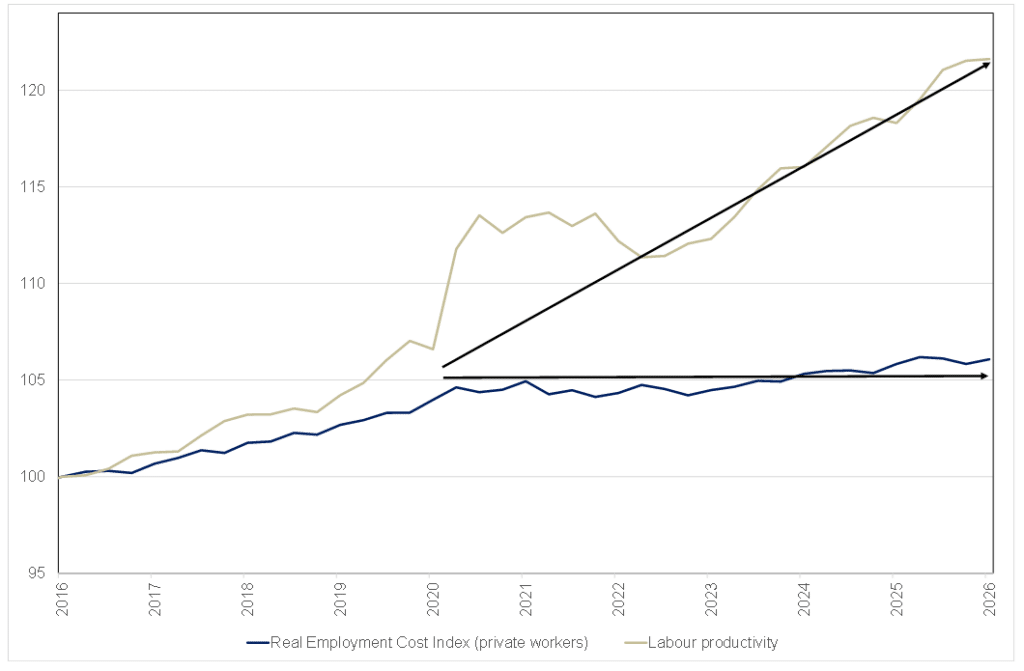
Figure 2: Labour productivity vs labour compensation (both rebased to 100 as at 1Q16)
Source: Anchor Capital, FRED
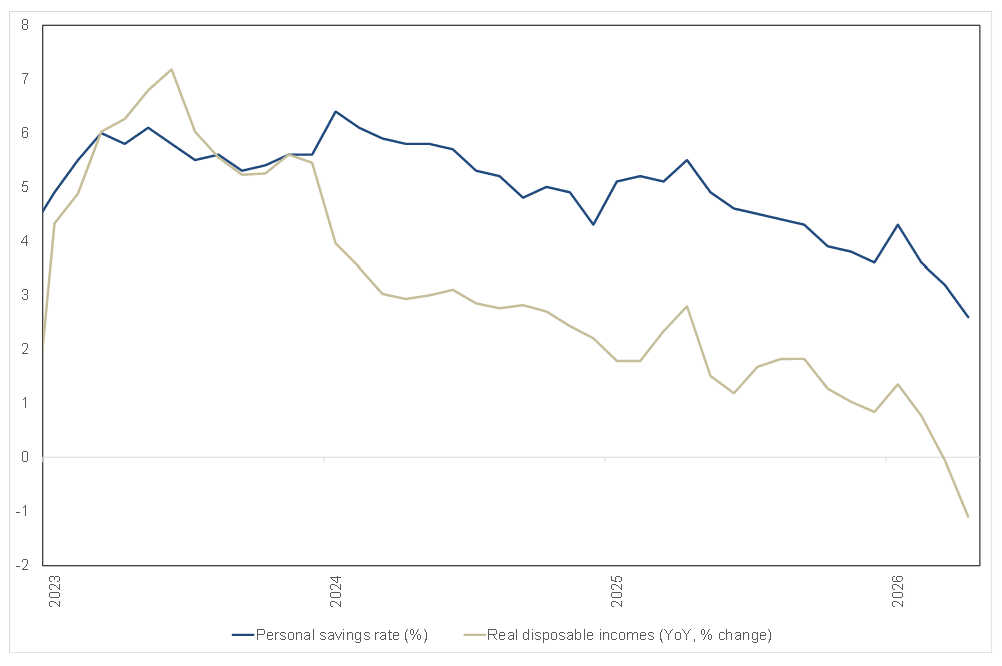
The US economy is experiencing an AI-driven productivity boom. Output per hour has surged to close to a 3% annual rate. Figure 2 shows that real labour compensation has remained broadly flat despite a sharp acceleration in productivity growth, implying that the gains from higher productivity have predominantly gone to corporate profits rather than household incomes. Firms have therefore been able to expand output and margins without generating comparable wage pressures, resulting in a sharp decline in unit labour costs and reinforcing the disinflationary impulse from higher productivity. This divergence is increasingly evident in the consumer data. Real disposable income growth has slowed sharply and recently turned negative, while the personal savings rate has continued to decline. In effect, households are maintaining consumption by drawing down savings rather than through stronger income growth. This dynamic is inherently unsustainable and points to further moderation in demand-driven inflation pressures.
With wage growth having slowed to 3.4% and labour productivity growth running at 2.8%, the underlying inflation impulse from the consumer is around 1%. For an economy in which private consumption accounts for roughly two-thirds of GDP, the consumer has shifted from being an inflationary tailwind to a disinflationary headwind.
Figure 3: US personal savings rate and real disposable income growth
Source: Anchor Capital, FRED
Taken together, the productivity boom is boosting supply far more than demand, reinforcing an increasingly benign medium-term inflation outlook. Combined with cooling demand and passing supply-side inflation pressures, this provides the Fed with scope to look through near-term inflation noise and maintain policy rates at current levels. As these transitory shocks pass through the system, disinflationary pressures are likely to re-emerge faster than currently anticipated, increasing the probability that the next meaningful move in US policy rates is lower rather than higher, potentially as early as 2027. For investors, the key takeaway is that the medium-term inflation outlook is becoming increasingly benign despite near-term inflation noise. As temporary supply shocks fade, demand continues to cool, and an AI-driven productivity boom expands the economy’s supply capacity, the policy debate is likely to quickly shift from whether the Fed needs to tighten further to when it can begin easing – a more constructive backdrop for bonds and stocks.