
July proved to be a tale of two halves for global equity markets (MSCI World +0.50% MoM/+9.4% YTD), which experienced a highly volatile and fragmented month as the dominant narrative shifted from unbridled optimism around artificial intelligence (AI) to heightened concerns over valuations. Persistent inflation, the resumption of Middle East hostilities (US–Iran relations under President Donald Trump seem to be operating in a repetitive loop of extreme escalation followed by sudden de-escalation), and the US Federal Reserve’s (Fed) hawkish hold on rates all weighed on investor sentiment. Semiconductor and AI-related hardware shares came under significant pressure mid-month amid growing concerns about the scale of AI-related capital expenditure, before recovering somewhat towards month-end as robust US tech earnings restored some confidence.
In the US, strong aggregate 2Q26 earnings growth and a resilient economy provided a solid foundation as the late July earnings reports from tech giants such as Amazon and Microsoft helped reassure bruised investors and supported a recovery during the final trading sessions of the month. Unfortunately, it was insufficient to push all three major averages into positive territory. The tech-heavy Nasdaq fell 3.2% MoM (+9.2% YTD), recording its steepest monthly pullback since March 2025 as the semiconductor sell-off and tech valuation worries weighed heavily on sentiment. The S&P 500 declined 0.1% MoM (+9.4% YTD), with geopolitical concerns capping market rallies. The Dow (+0.3% MoM/+9.2% YTD) was the strongest performer among the three majors, reaching an all-time high of 53,055 on 6 July before retreating to end the month at 52,485.
US economic data provided a mixed bag. June headline inflation slowed to 3.5% YoY from 4.2% in May, marking the largest monthly inflation decline since April 2020. Core inflation, which excludes food and energy, was unchanged at 2.9%. Much of the decline in headline inflation was driven by easing energy and services costs, particularly housing. June core personal consumption expenditure (PCE), excluding food and energy, the Fed’s preferred inflation measure, increased 3.3% YoY, down slightly from 3.4% in May. Economic growth also moderated, with GDP growth slowing from 2.1% in 1Q26 to 1.5% in 2Q26, below consensus expectations.
European equity markets were similarly volatile, edging lower in mid-July as higher energy prices, concerns around supply constraints and hawkish interest rate guidance from the European Central Bank dampened investor enthusiasm. However, a constructive 2Q26 earnings season offered some green shoots, with the Euro Stoxx 50 rising 0.6% MoM (+12.3% YTD), its fourth consecutive month of gains. France’s CAC advanced 1.3% MoM (+4.4% YTD), and Germany’s DAX increased 2.5% MoM (+4.7% YTD). June eurozone inflation declined to 2.8% vs May’s 3.2%, once again primarily driven by energy price developments, with energy price inflation easing to 8.5% YoY from 10.8% in May.
UK equity markets delivered a particularly strong performance in July, supported by a record-setting advance in the blue-chip FTSE 100 Index, resilient corporate earnings, and the market’s appeal as a relative haven from the volatility affecting global tech shares. The FTSE 100 gained 3.5% MoM (+9.4% YTD), reaching a new all-time intraday high of 10,956 on 30 July, before closing the month at 10,868. June UK inflation eased to 2.6% YoY from 2.8% in May, with lower petrol and diesel prices providing the largest downward contribution. In line with expectations, the Bank of England left its key rate unchanged at 3.75%. On the political front, Andy Burnham took office as UK Prime Minister following Keir Starmer’s resignation in June.
Chinese equities began July under pressure with macroeconomic sentiment weakened by the 2Q26 GDP data print of 4.3%, below Beijing’s full-year target range of 4.5%-5.0%. Global tech valuation concerns and shifting expectations around the Politburo’s end-of-month stimulus discussions also weighed on sentiment. However, following a brief mid-month period of consolidation, the Hang Seng rallied strongly to close July 13.1% higher, although its YTD return remained modest at 1.0%. The Shanghai Composite, in contrast, declined 6.4% MoM and is down 3.4% YTD. July’s official manufacturing Purchasing Managers’ Index (PMI) also slipped into contraction territory, falling to 49.2 from 50.3 in June. This marked a five-month low and placed the index below the 50-point threshold separating expansion from contraction. The non-manufacturing PMI, including services and construction, also contracted, declining to 49.0 vs 50.2 in June.
Japan’s equity market experienced a sharp reversal in July, breaking a multi-month bullish run. The benchmark Nikkei declined 8.1% MoM, although it remained up 27.9% YTD. A combination of the global technology correction and sudden currency intervention drove the sell-off. June headline inflation increased to 1.7% from 1.5% in May, primarily reflecting higher energy and commodity costs. The Bank of Japan (BoJ) left rates unchanged at 1.0% following its June rate hike but struck a distinctly hawkish tone at its 31 July meeting. The BoJ warned of significant upside risks to inflation, while a prominent board member dissented in favour of an immediate 25-bpts increase to 1.25%. The prospect of potentially faster and more restrictive interest rate hikes added to pressure on Japanese equities.
The Iran conflict, which has continued to roil energy markets over the past four months, lurched through another cycle of ceasefire euphoria and military flare-ups with Brent crude surging 23.6% in July (+48.1% YTD). Gold (+1.0% MoM/-6.3% YTD) recorded modest gains while platinum group metals (PGMs) prices also advanced. Platinum jumped 6.2% MoM (-20.0%YTD), with palladium up 5.9% MoM (-20.8% YTD) and rhodium increasing by 6.5% MoM (-10.1% YTD).
In South Africa (SA), the JSE outperformed many of its global peers, with the FTSE JSE All Share Index advancing by 1.1% in July (-3.7% YTD). Rand-hedge and resources counters dominated, while the domestic-facing consumer companies featured prominently among the month’s laggards. Higher precious metals prices supported the resources sector, with the Resi-10 rising 2.2% in July (-13.7% YTD). The SA Listed Property Index gained 1.9% MoM (+4.2% YTD), financials advanced 1.2% MoM (Fini-15 +6.5% YTD), while industrials delivered a more muted 0.3% MoM return (Indi-25 -5.7% YTD). Among the largest companies by market cap, BHP Group gained 4.1% MoM, AB InBev rose 4.5%, Richemont advanced 3.6%, while investment conglomerates Naspers and Prosus were up 5.7% and 7.8%, respectively. The rand weakened 0.9% MoM against the US dollar, although it remained marginally stronger YTD at 0.2%. The currency came under pressure following the South African Reserve Bank’s (SARB) surprise decision to hold the repo rate at 7%, as well as amid continued geopolitical tensions in the Middle East.
SA headline inflation moved higher to 5.0% YoY in June, up from 4.5% in May. Core inflation, excluding food, fuel and energy, climbed to 4.1% YoY from 3.8%. The country’s net foreign reserves fell to US$71.3bn at the end of June from US$73.5bn in May, while gross reserves decreased to US$74.1bn in June from US$76.6bn in the prior month.
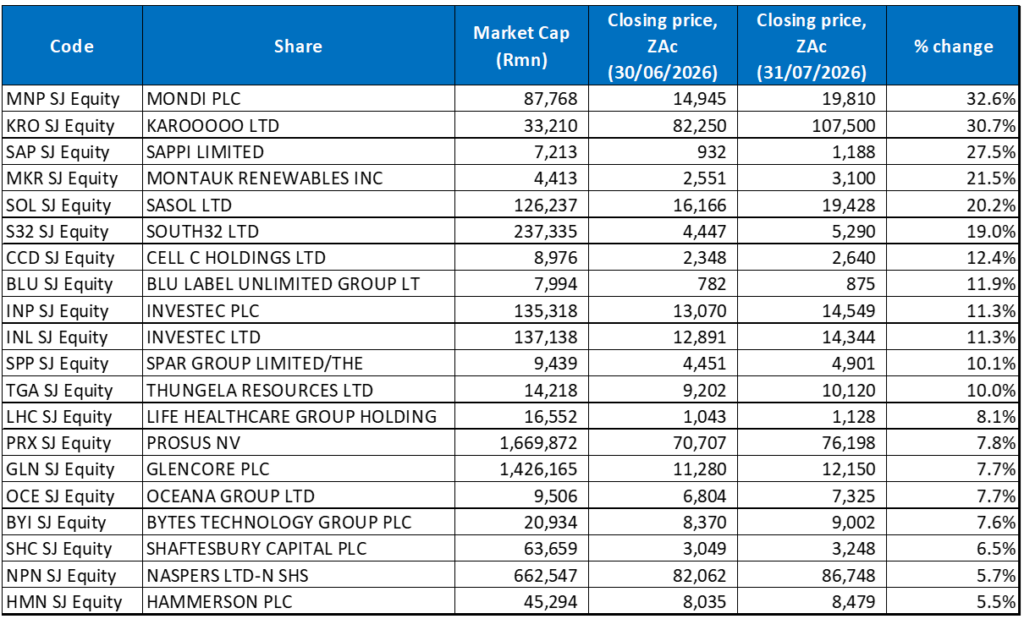
Figure 1: The 20 best-performing shares in July 2026, MoM % change
Source: Bloomberg, Anchor Capital
July saw rand-hedge and resources counters dominate the list of top performers on the JSE. Mondi Plc emerged as the best-performing share with a gain of 32.6%. The share price rallied following a positive 1H26 trading update, which highlighted improved trading momentum, stronger operating cash flows, and reduced capital expenditure guidance. The gain came despite Mondi reducing its interim dividend after reporting a loss, as it contended with lower prices and higher input costs, partly because of the Middle East conflict. The company reported a pre-tax loss of EUR240mn for the six months, compared with a pre-tax profit of EUR247mn a year earlier. Revenue nevertheless increased 1.8% YoY to EUR3.98bn from EUR3.91bn.
Karooooo Ltd, the owner of Cartrack, was the second-best-performing share, rising 30.7% MoM following the release of strong 1Q27 results. Revenue jumped to R1.56bn from R1.28bn posted in 1Q26, while diluted EPS rose 11% YoY to R9.53 from R8.55. Total Cartrack subscribers increased by 18% YoY, surpassing the 2.8mn mark, while net subscriber additions soared 70% YoY to 142,472. Subscription revenue rose 19% YoY to R1.35bn.
Sappi, which has been a significant underperformer this year, staged a notable recovery in July, with its share price rising 27.5% MoM. The paper and packaging Group’s share price rallied c. 14% on 9 July after the company flagged a better-than-expected performance in North America, with its Somerset Mill in Maine steadily ramping up sales. Ironically, despite the July recovery, Sappi remained the worst-performing share YTD, having declined 51.6%.
Sappi was followed among July’s best performers by renewable energy company Montauk Renewables, Sasol and South32, which gained 21.5%, 20.2%, and 19.0%, respectively. Montauk’s performance was supported by its strategic pivot toward renewable identification number (RIN) monetisation, which contributed to a 9% YoY increase in revenue and a better-than-expected 1Q revenue result of US$46.4mn. However, operating challenges remain as the company navigates a significant capital investment phase. Sasol and South32, meanwhile, were direct beneficiaries of the rally in oil and commodities.
Cell C and Blu Label Unlimited gained 12.4% and 11.9% MoM, respectively. Blu Label continued to benefit from optimism surrounding its post-restructuring strategy and simplified operational focus, particularly following its recent strategic spin-out and unbundling initiatives relating to Cell C, as well as the resumption of dividend payments.
Investec Plc and Investec Ltd rounded out July’s top performers with both shares rising 11.3% MoM and broadly tracking the financials sector higher. The companies’ dual listings, together with Investec plc’s return to the FTSE 100 in June following the quarterly index reshuffle, may have supported performance. The Group’s meaningful offshore earnings and rand-hedge characteristics also likely provided a modest tailwind as the local currency weakened.
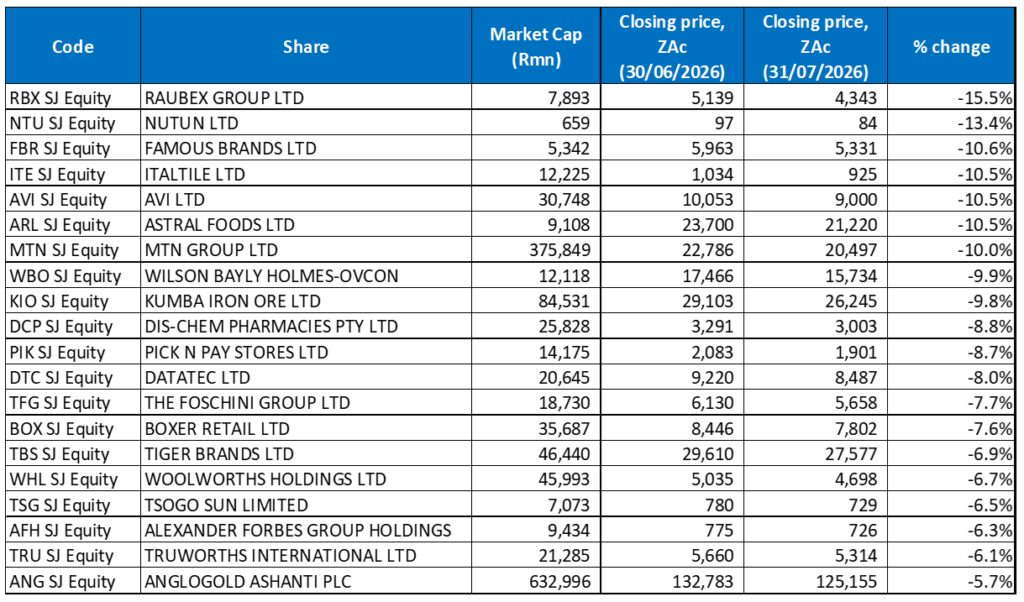
Figure 2: The 20 worst-performing shares in July 2026, MoM % change
Source: Bloomberg, Anchor Capital
The July laggards were concentrated among domestic-facing consumer, retail and construction counters, reflecting continued pressure on domestic demand. Infrastructure development and construction materials Group, Raubex (-15.5% MoM), was July’s worst-performing share as lower consensus forecasts, reduced FY26 revenue expectations, and cautious investor sentiment following earlier operational challenges in its materials and mining divisions weighed on the counter.
Raubex was followed by business process outsourcing (BPO) and credit-lifecycle management Group, Nutun, previously Transaction Capital, which declined by 13.4% MoM. The share has remained under pressure amid ongoing financial recovery hurdles, lower half-year revenues, and announcements relating to executive leadership and board changes.
Famous Brands fell 10.6%, reflecting persistent constrained discretionary spending across parts of its restaurant portfolio and broader macroeconomic headwinds.
Italtile, AVI and Astral Foods each declined by 10.5% in July. Italtile faced continued downward pressure and volatility during the month, primarily driven by persistent weak consumer demand for home renovations, aggressive market competition from lower-cost imported tile dumping, and broader cautious sentiment following weak interim earnings (profit declined by 14% YoY). Branded consumer products Group, AVI came under pressure following a weak FY26 trading update, with revenue growth of only 1.4% YoY compared with 4.9% in 1H26, alongside broader pressure on consumer spending. Astral Foods was affected by concerns around rising input costs, particularly as oil price volatility tied to the Middle East conflict increased cost pressures. Ongoing investor caution around agricultural headwinds, including potential summer drought conditions and lingering risks of bird flu affecting poultry production, also weighed on sentiment.
MTN Group fell 10.0% in July following the emergence of an intellectual property (IP) legal dispute in Ghana, while fintech revenue at MTN Nigeria declined 7% YoY, despite overall revenue and profit growing. On 28 July, Clydestone Ghana announced that it had filed a lawsuit against MTN in relation to a dispute over mobile money IP rights. MTN has denied the claims, insisting the allegations are without merit and will be vigorously contested. The dispute relates to Clydestone’s alleged involvement in the launch of mobile money services in Ghana almost 20 years ago, and an alleged breach of IP rights.
Wilson Bayly Holmes-Ovcon (WBHO), Kumba Iron Ore and Dis-Chem Pharmacies rounded out the ten worst-performing shares, declining by 9.9%, 9.8%, and 8.8% MoM, respectively. Kumba’s share price came under pressure following the release of its 1H26 results, which showed a 41% YoY drop in HEPS to R13.24, driven by a 32% decline in EBITDA to R10.9bn, reflecting weaker iron ore prices, which were down 13.4% YTD, as well as port disruptions that weighed on Group margins. The company declared a lower interim cash dividend of R7.90/share, down from higher previous payouts, adding to investor concern. Dis-Chem’s share price remained under pressure amid lingering negative sentiment following a double-digit decline in annual earnings. HEPS fell by 17.3% YoY, while a steep dividend cut and elevated spending on future retail and tech initiatives also weighed on sentiment.
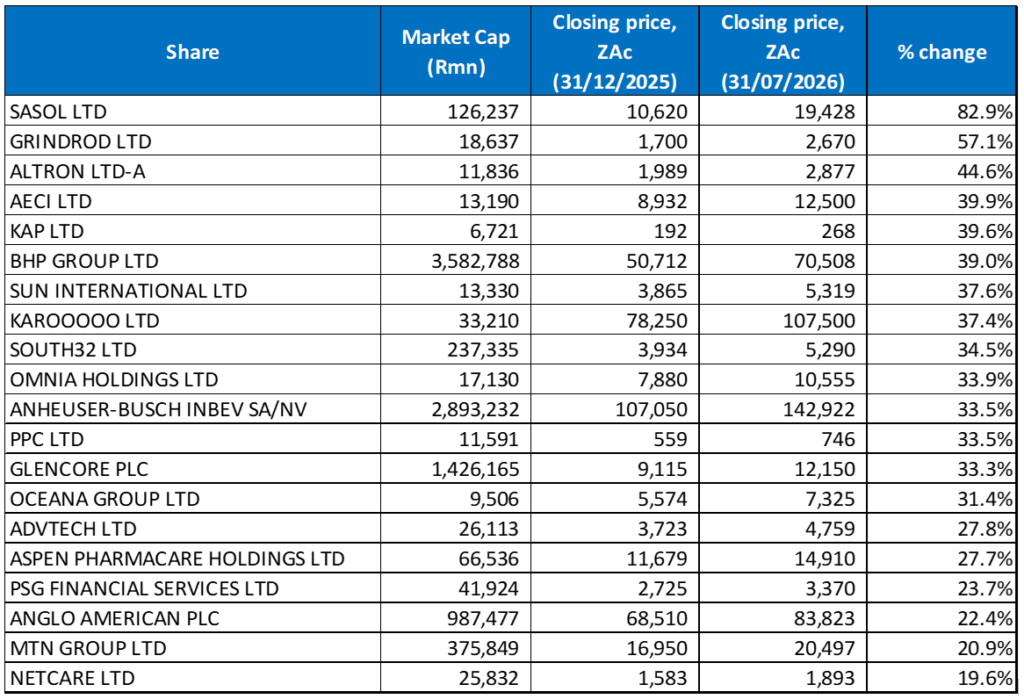
Figure 3: The 20 best-performing shares YTD, % change
Source: Bloomberg, Anchor Capital
Seventeen of the 20 best-performing shares YTD were unchanged from the year-to-end-June rankings, with bulk and diversified miners, including BHP Group, South32, and Anglo American Plc, continuing to deliver outstanding performances YTD. At the same time, gold and PGM counters remained the laggards despite an improvement in gold and platinum prices during July. Sasol (+82.9% YTD) reclaimed the number one position following its 20.2% July gain. This was on the back of the collapse of the Islamabad Memorandum ceasefire and the subsequent rally in oil prices, which once again drove a sharp recovery in the Sasol share price. Sasol was followed by logistics and port terminals operator Grindrod (+57.1% YTD) in second place and Altron Ltd (+44.6% YTD), one of the JSE’s more established domestic tech plays.
AECI, KAP Ltd, and BHP Group followed, with YTD gains of 39.9%, 39.6%, and 39.0%, respectively. AECI’s speciality chemicals have benefitted from tighter global supply chains and robust global mining activity, which has driven steady demand for its industrial chemicals and commercial explosives. Last month, KAP said that it expects an increase in FY26 HEPS of more than 50% to at least ZAc36.2, despite a challenging trading environment. BHP’s share price gains, meanwhile, have been supported by surging copper prices (+11.0% YTD/+43.5% YoY), strong production results, and a solid financial performance.
Strong results, a special dividend payout, and continued growth in its online betting division have supported the Sun International share price this year (+37.6% YTD). The Group’s 1H26 trading update has revenue growth tracking in line with guidance at c. 6%, supported by share repurchase programmes and positive domestic tourism arrival numbers. Sun was followed by Karooooo Ltd (+37.4% YTD) and South32 (+34.5% YTD), both of which have been discussed above.
Chemicals and agricultural inputs Group, Omnia Holdings, rounded out the ten best performers, with a 33.9% YTD gain. Omnia’s raw material and energy input costs, primarily natural gas-derived ammonia and nitrates, have benefitted from the Iran conflict. As gas prices increased, Omnia’s fertiliser pricing also rose, while effective energy hedging supported margins. Strong global agricultural demand, partly driven by food security concerns during the conflict, has further supported fertiliser volumes and pricing. In June, the company reported a 21% YoY increase in HEPS to ZAc849 and a 6% rise in revenue to R24.2bn, supported by solid volume growth in its Agriculture and Mining segment.
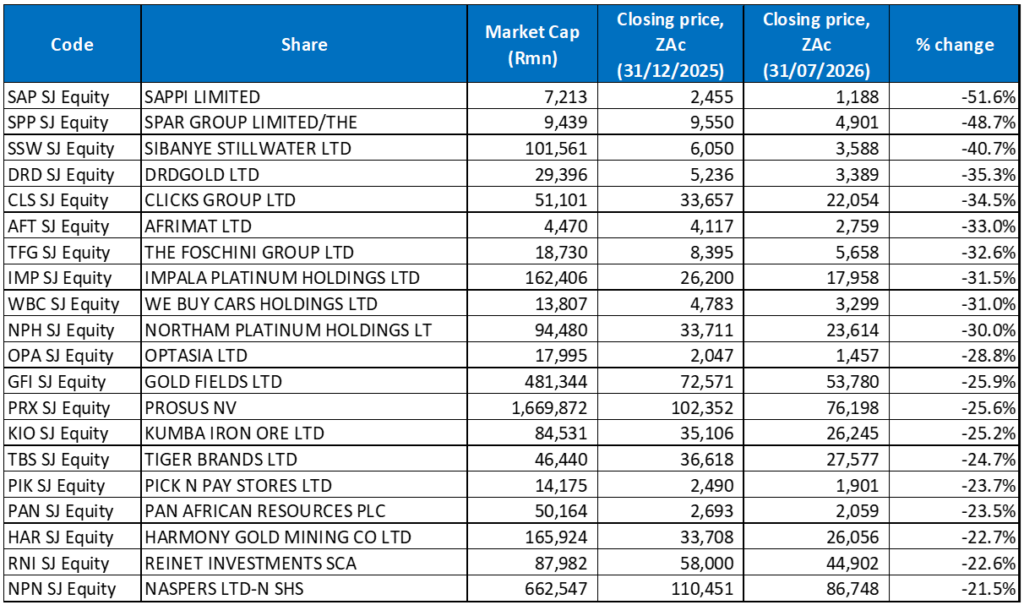
Figure 4: The 20 worst-performing shares YTD, % change
Source: Bloomberg, Anchor Capital
Most of the worst-performing shares YTD continue to share a common vulnerability: exposure to the SA consumer amid acute domestic demand pressures, restrictive interest rates, and a weak consumer environment. Precious metals miners have also remained among the laggards. In addition, the YTD losers include a distinct cluster of company-specific underperformers, including Sappi and SPAR, whose challenges have been largely unrelated to the Middle East conflict and higher oil prices.
Sappi remained the worst-performing share YTD, down 51.6%. It was followed by SPAR Group (-48.7% MoM), in second place, and Sibanye Stillwater, which declined by 40.7% YTD. SPAR has faced a range of operational challenges following its troubled SAP system implementation, continued weakness in its European business, and consumer pressure across multiple geographies. These issues have compounded an already difficult turnaround, while it also faces intensifying competition from Shoprite/Checkers and rising input costs that it has struggled to pass through to consumers.
Sibanye Stillwater has endured a particularly challenging operating environment, with surging local electricity and operating costs, high debt levels, and falling PGM prices. Its US palladium operations (Stillwater) have experienced severe financial strain and massive multi-billion-rand impairments driven by a sharp decline in global palladium prices, while the SA business has required significant restructuring.
DRDGold, Clicks Group and Afrimat followed with YTD declines of 35.3%, 34.5%, and 33.0%, respectively. DRDGold’s decline reflects profit-taking after its impressive 2025 rally (the share was up 217%), alongside the lower gold price, and investor reassessment of execution risks associated with its multi-year Vision 2028 project.
Clicks Group’s share price performance has been negatively impacted by lower-than-expected earnings guidance, cautious consumer spending, and heightened retail competition as pharmacy rivals expanded.
Afrimat, a diversified miner exposed to iron ore, anthracite and construction materials, has been negatively impacted by a substantial deterioration in its second-half earnings, weakness in industrial metals driven by declining downstream customer demand, iron ore price volatility and risk-off sentiment towards smaller mining names.
The Foschini Group (TFG), Impala Platinum (Implats), We Buy Cars, and Northam Platinum completed the ten worst-performing shares YTD with declines of 32.6%, 31.5%, 31.0%, and 30.0%, respectively. Slumping profits, international brand write-downs, and weaker consumer spending have weighed on TFG. We Buy Cars has faced pressure from narrowing profit margins, increased competition from affordable new Chinese and Asian vehicle brands, and a sharp decline in operating cash flow.
Implats and Northam are both pure-play PGM miners and have re-rated sharply lower as PGM prices have fallen. The platinum price, which reached an all-time high of US$2,923/oz on 26 January 2026, ended July at US$1,648.38/oz – down 20% YTD.