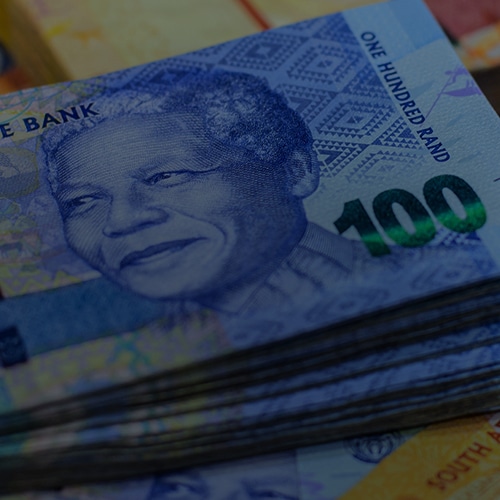

South African (SA) equities once again found themselves at the front of the pack in February (FTSE/JSE Capped All Share +7.2% MoM). YTD gains of 11% placed the JSE among the top-performing major markets globally, trailing only Japan and Brazil’s stock markets (both +17% YTD). Over one year, when measured in US dollar terms, the JSE (+82%) is the best-performing major stock exchange, rising almost four times faster than global stocks over that period (MSCI World +22%). The measurement in US dollar terms is flattered by a 17% appreciation in the local currency against the greenback over the past year, including a boost of 1.3% in February.
Precious metal shares were once again a key driver of returns for the month, contributing c. 60% of February’s JSE index returns with strong commodity price gains (gold and platinum both +8% MoM) driving share price performance (gold miners +16% MoM/platinum miners +12% MoM). The precious metals price strength belied a volatile underlying trend, with the gold price dropping 14% from its late January high (US$5,420/oz) in just a week at the start of February before rallying 13% to US$5,300/oz at month-end.
The biggest detractors from the JSE’s February performance were investment conglomerates Naspers (-11% MoM) and Prosus (-12% MoM) as the pair more than doubled their YTD share price declines. Their largest investment, Chinese tech conglomerate Tencent (-15% MoM), was a key source of pain as China’s tech companies experienced their worst monthly performance in over two years.
Amongst the companies geared to the domestic economy, banks (+8% MoM) and insurers (+7% MoM) performed well. Nedbank (+19% MoM) was the standout performer amongst the banks, rallying as management’s guidance on the company’s earnings per share (EPS) range post the Ecobank disposal was comfortably ahead of expectations. Discovery (+11% MoM) led the insurers with their management referring to robust results and strong overall performance, with Discovery Bank turning profitable. Struggling food retailers Pick n Pay (-19% MoM) and SPAR (-21% MoM) both delivered disappointing trading updates in February as signs of a turnaround prove elusive for the pair.
On the macro front, Finance Minister Enoch Gondongwana’s latest SA Budget was generally well received, with the country set to continue a path of fiscal consolidation without major tax increases, thanks in large part to a commodity-driven tax windfall and improved revenue collection. SA’s budget deficit is expected to narrow, and debt is likely to peak soon. The SA government’s 10-year borrowing rate remained around its 10-year lows of c. 8% p.a.