
ASSET ALLOCATION SUMMARY
Financial markets were shaken by the US/Israel alliance’s 28 February military strikes on Iran and that country’s subsequent closure of the Strait of Hormuz, a critical global energy transit route. It triggered what the International Energy Agency described as the largest supply disruption in the history of the global oil market. The resulting surge in oil prices, together with concerns around further supply disruptions and the implications for global inflation, has weighed on asset prices.
The conflict has also proved difficult to contain, with hostilities escalating across the Middle East and tensions spreading to the Red Sea as the Houthis stepped up attacks on Saudi Arabia. It has become increasingly apparent that there is no positive outcome for the US from its incursion into Iran, and just extracting themselves from the war is going to be difficult. Unless there is a meaningful de-escalation, the inflationary shock from higher oil prices could persist through much of 2026 and into 2027. This creates a challenging backdrop for central banks and financial markets, particularly given the potential for higher-for-longer interest rates.
Figure 1 below highlights our US dollar return outlook for the various major global asset classes. The bars in Figure 1 represent the reasonable range of potential outcomes, with the dots indicating our estimated outcomes under various scenarios. We have become more positive on bonds given the higher yields on offer, while maintaining our positive outlook on equities and alternatives. We remain neutral on listed property and cash, where the prospective returns are less attractive relative to those available from equities and bonds.
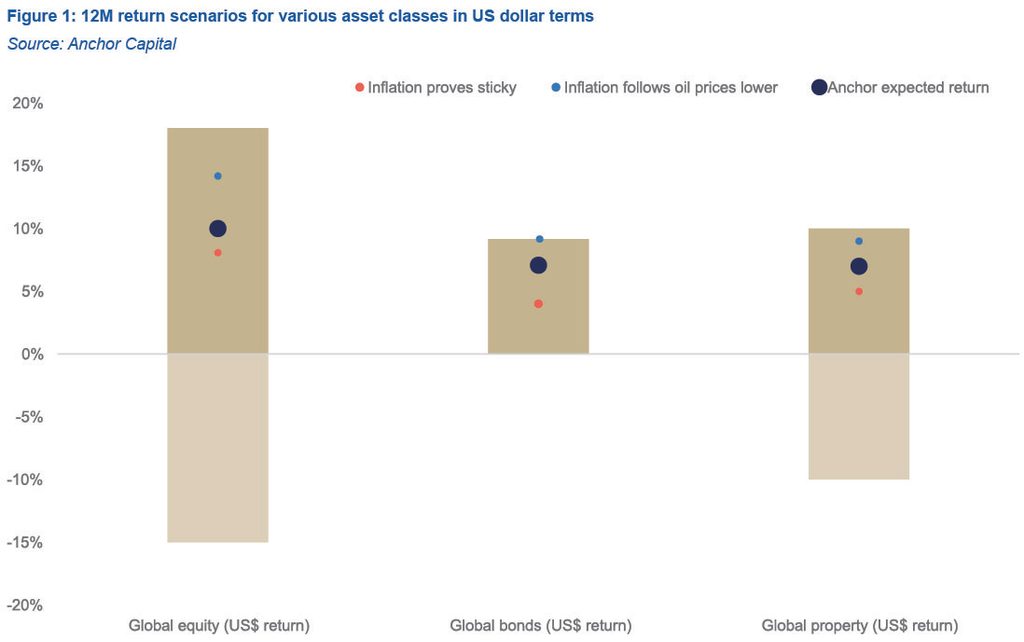

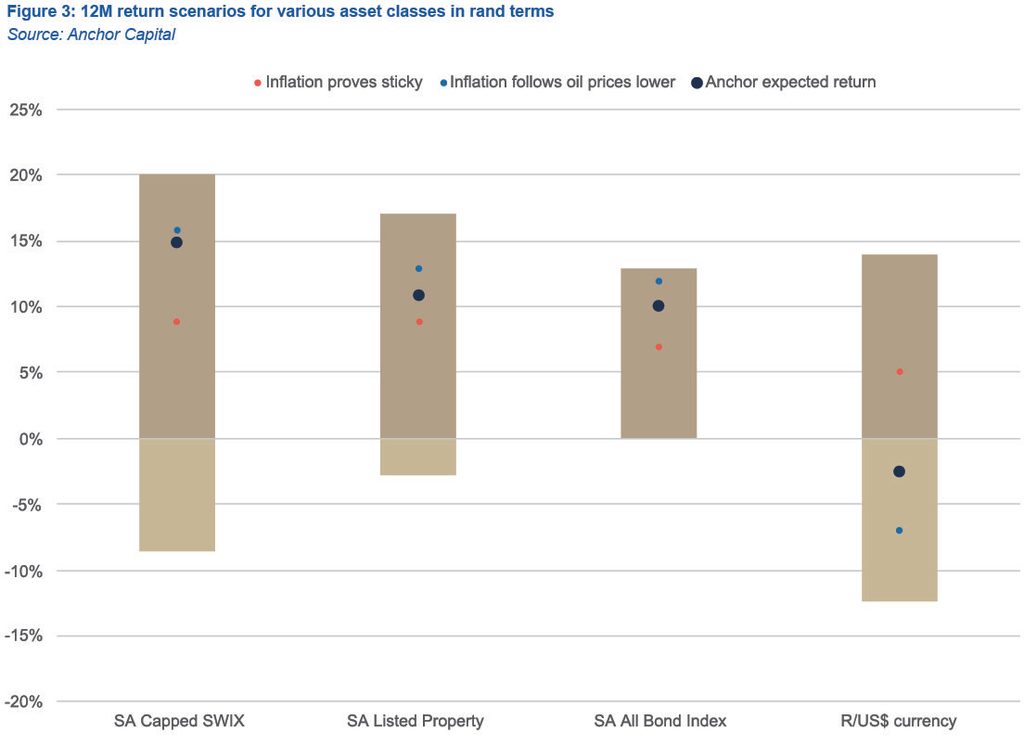
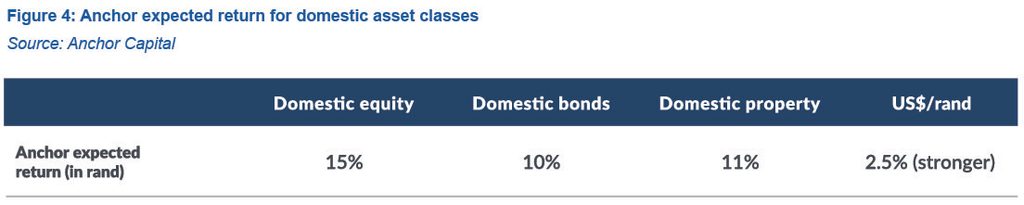
Figure 3 below outlines our rand return outlook for selected domestic asset classes. The bar represents the reasonable range of possible outcomes, with the dots indicating our estimate of the outcome under various scenarios. From a domestic perspective, we remain positive on alternatives and equities given the superior returns on offer. We are neutral on bonds and listed property, while higher yields mean that we have become neutral on cash.